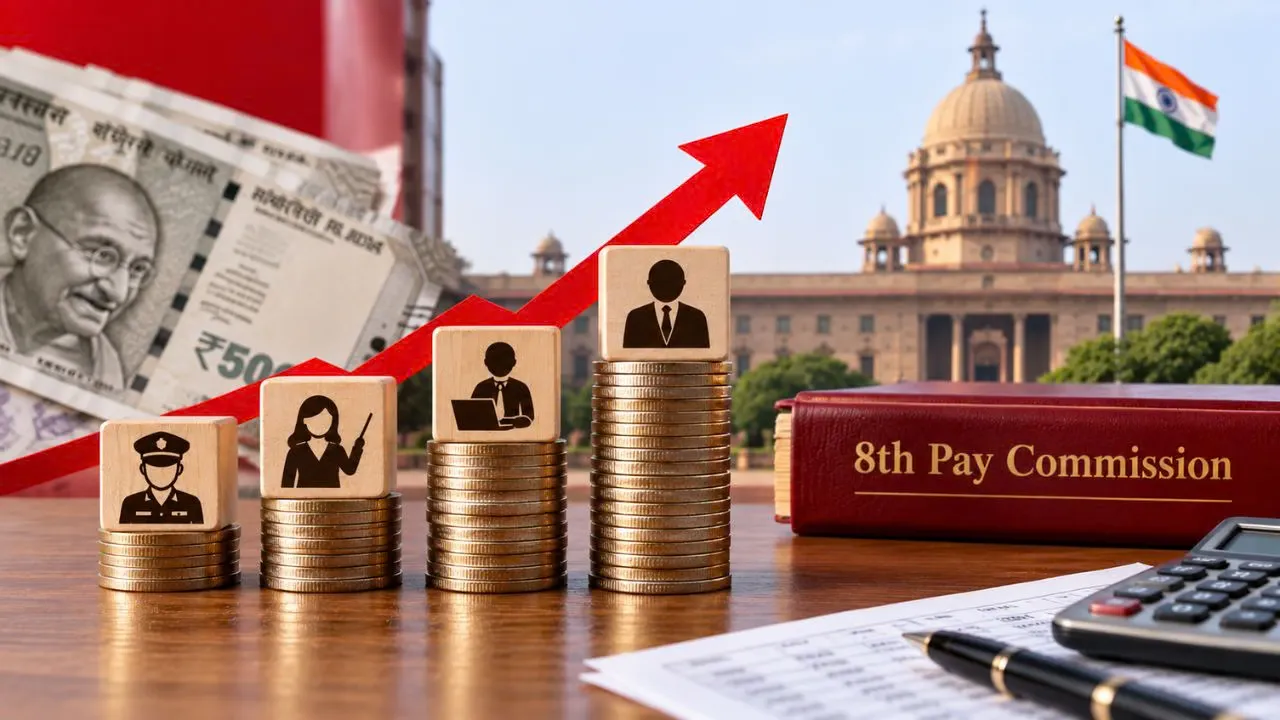
8th Pay Commission Salary : Central government employees and pensioners are eagerly waiting for the 8th Pay Commission. More than a year has passed since the commission was constituted. Currently, the commission is visiting different locations and interacting with employees and pensioners. It is trying to understand their demands and suggestions. However, no official information has been released so far regarding the commission's report. The government has given the commission 18 months to prepare its report, of which around 12 months have already passed. Some reports suggest that the report may take more time to be completed.
Government Will Decide After Report Submission
Once the commission completes its report, it will be submitted to the Central Government. The Cabinet will then examine its recommendations, after which the government will decide how much salaries and pensions should be increased. The formula for salary revision under the 8th Pay Commission is not yet clear. However, based on the 7th Pay Commission, three factors are considered particularly important: the fitment factor, House Rent Allowance (HRA) and the merger of Dearness Allowance (DA) with basic pay. All three could influence employees' revised salaries.
How Much Will Fitment Factor Increase Salary?
The fitment factor could play the most important role in determining the salary increase. Central government employees have been making different demands regarding this factor. Many employees are demanding a fitment factor of 3. If this demand is accepted, their existing basic salaries could change significantly. For example, if an employee currently receives a basic salary of Rs 18,000 and a fitment factor of 3 is implemented, the revised amount would become Rs 54,000 as per this calculation. However, the government has not yet approved a fitment factor of 3.
Employees Demand Higher HRA Rates
House Rent Allowance (HRA) is also an important component of an employee's salary. Currently, its rates vary according to the category of the city. Employees receive HRA at 24% in X-category cities, 16% in Y-category cities and 8% in Z-category cities. Employees are now demanding that these rates be increased to 30% for X-category cities, 20% for Y-category cities and 10% for Z-category cities. If the government accepts this demand, employees could receive a higher monthly salary.
DA Merger Could Also Raise Salaries
Another major demand of central government employees is to merge Dearness Allowance (DA) with their basic salary. Employees believe that this merger could increase their basic pay. It could also affect other allowances calculated on the basis of basic salary. At the time of implementation of the 7th Pay Commission, DA was also merged with basic pay. For this reason, employees are demanding a similar arrangement under the 8th Pay Commission.
Actual Salary Hike Remains Undecided
If the demands related to the fitment factor, HRA and DA merger are accepted, central government employees and pensioners could receive a significant increase in their salaries and pensions. However, these are currently demands made by employees and do not represent the government's final decision. The complete salary revision formula will become clear only after the commission submits its report and the Cabinet approves the recommendations. For now, employees will have to wait for the commission's report and the government's decision.
8th Pay Commission: How Much Will Your Salary Increase? Three Key Factors, Including Fitment Factor, Will Decide
TheFearless
14 Nov 2026 · 4:16 PM IST
Related Stories