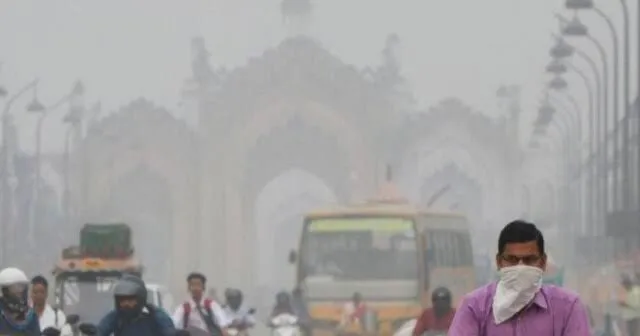
Air pollution has once again become a major concern across the National Capital Region (NCR). Air quality in Delhi, Noida, Gurugram and several other neighbouring cities has deteriorated to the Poor category. The impact of pollution is particularly noticeable during the morning and evening hours. Rising concentrations of pollutants in the air can cause breathing difficulties, eye irritation and throat discomfort. The deteriorating air quality has become a serious concern, especially for children, elderly people and those suffering from respiratory problems.
Delhi's AQI at 299, Anand Vihar Records Worse Air Quality
According to data recorded at 6 AM on November 11, Delhi's average Air Quality Index (AQI) stood at 299, placing it in the Poor category. However, pollution levels varied across different parts of the national capital. The AQI around India Gate was recorded at 242, while Anand Vihar reported a significantly higher reading of 303. Anand Vihar's air quality fell into the Very Poor category. The figures indicate that some areas of Delhi are experiencing considerably higher pollution levels than others, making the situation particularly concerning for residents.
Noida and Gurugram Also Struggle with Poor Air Quality
Neighbouring cities Noida and Gurugram are also witnessing unhealthy levels of air pollution. According to the 6 AM readings, Noida recorded an AQI of 276, while Gurugram registered 295. Both cities fall under the Poor air quality category. The figures highlight that pollution is not restricted to Delhi alone but has spread across several urban areas of the NCR. Comparing the three major cities, Delhi recorded an AQI of 299, Gurugram stood at 295, while Noida reported 276, indicating widespread pollution across the region.
GRAP Stage 3 Restrictions in Place to Control Pollution
To tackle rising pollution levels, restrictions under Stage 3 of the Graded Response Action Plan (GRAP) are in effect across Delhi-NCR. These measures include restrictions on dust-generating construction and demolition activities, steps to control road dust and curbs on highly polluting vehicles. The restrictions also include provisions for hybrid classes for students up to Class 5 and measures encouraging work-from-home arrangements in offices. The primary objective of GRAP Stage 3 is to prevent further deterioration in air quality and reduce pollution levels across the region.
Children and Elderly People Advised to Take Extra Precautions
Poor air quality can have adverse effects on public health, particularly among vulnerable groups. Children, senior citizens and people suffering from asthma or other respiratory conditions need to take additional precautions. Exposure to polluted air may lead to coughing, eye irritation, throat discomfort and breathing difficulties. Experts advise residents to avoid unnecessary outdoor activities when pollution levels are high, limit outdoor exercise during heavily polluted hours and wear a good-quality protective mask when required. With air quality continuing to remain poor across Delhi-NCR, residents are hoping for improved weather conditions and cleaner air in the coming days.