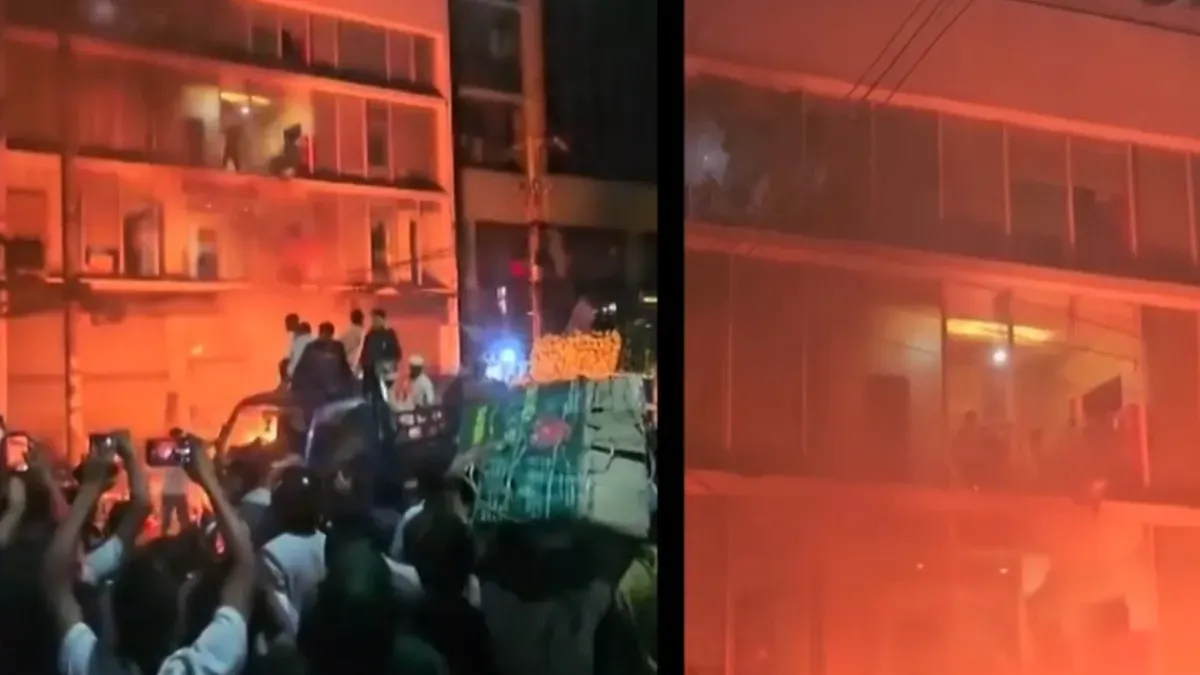
Bangladesh is once again witnessing a wave of political violence, arson and bomb attacks, raising serious concerns over law and order across the country. Tensions escalated on Wednesday night after a fire broke out at the ancestral home of former interim government chief adviser Muhammad Yunus in Chattogram. At the same time, crude bomb explosions, attacks on vehicles and clashes between political groups were reported from several parts of the country. According to police figures, incidents involving bomb blasts and arson have been reported in at least 28 districts over the past 10 days, putting security agencies on high alert.
Fire at Muhammad Yunus’s Ancestral Home
The incident took place at around 11:30 pm on November 18 in the Panchlaish area of Chattogram. The fire broke out in an abandoned room on the ground floor of the four-storey building. Initial reports suggested that unidentified attackers might have used petrol bombs, although police have not independently confirmed this claim. Police personnel on routine patrol noticed the flames and managed to extinguish the fire. According to local police officials, nobody lives on the ground floor, while the upper floors are occupied by members of Yunus’s family. An investigation has been launched to establish the exact cause of the fire and identify those responsible.
Bomb Blasts and Arson Spread Across 28 Districts
The situation has become increasingly tense as explosions and incidents of arson continue to emerge from different parts of Bangladesh. Police have recorded dozens of crude bomb blasts and vehicle-burning incidents across at least 28 districts in the last 10 days. Dhaka has also witnessed explosions despite increased security arrangements. In Pirojpur, a bus helper was burnt to death after two buses were set on fire. Several other incidents involving attacks on political offices, houses and public property have also been reported. At least 37 Grameen Bank branches and offices have reportedly been targeted since November 10.
Sheikh Hasina’s Planned Return Fuels Political Tensions
The growing unrest is closely linked to the country's political confrontation surrounding former Prime Minister Sheikh Hasina. She has been living in India since leaving Bangladesh in August 2024 following massive student-led protests that brought down her government. Hasina has indicated that she intends to return to Bangladesh in December. Meanwhile, her Awami League party, which has been banned from political activities, has announced a nationwide lockdown for November 19. The government has accused Awami League leaders operating from abroad of encouraging violence and attempting to destabilise the country. The allegations have further intensified the political confrontation.
Paramilitary Forces Deployed as Security Tightens
In response to the deteriorating situation, the Bangladesh government has strengthened security arrangements across the country. Hundreds of paramilitary personnel have been deployed in sensitive areas, while police have increased surveillance and security checks in Dhaka and other major locations. Police also reported arresting at least 71 people linked to banned organisations in the capital within 24 hours. Authorities have warned that those involved in bomb attacks, arson and other acts of violence will face legal action. With political tensions rising and the nationwide lockdown underway, the coming days will be crucial for Bangladesh's law and order situation.
Bangladesh on Edge as Violence Escalates: Muhammad Yunus’s Ancestral Home Set Ablaze, Bomb Blasts Reported in 28 Districts
TheFearless
19 Nov 2026 · 8:00 AM IST
Related Stories