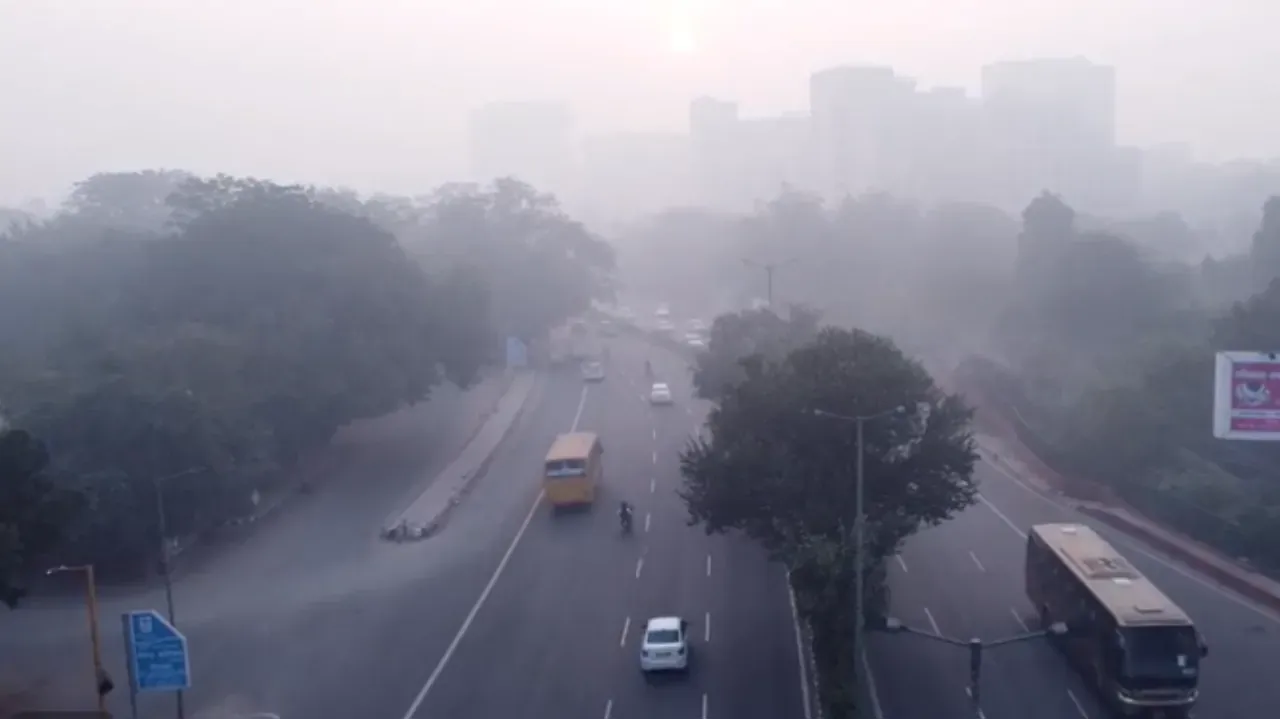
The Commission for Air Quality Management (CAQM) has directed Delhi and the neighbouring NCR states of Haryana, Uttar Pradesh and Rajasthan to prepare comprehensive Annual Action Plans for 2027 to tackle air pollution. The commission has set a target of reducing annual average pollution levels by at least 15 per cent, with an overall goal of up to 20 per cent compared to the 2026 levels. In a significant change to the existing planning framework, CAQM has introduced District-Level Action Plans for the first time, making local administrations directly responsible for implementing pollution control measures. All concerned states have been instructed to submit their plans by December 5, 2026. The initiative aims to strengthen coordination between state authorities, municipal bodies and district administrations while ensuring that pollution reduction targets are measurable and regularly monitored.
First-Ever District-Level Plans to Strengthen Pollution Control
Until now, the action planning framework primarily focused on state governments and municipal corporations. For 2027, CAQM has expanded this approach by making district-level planning an essential part of the broader state action plans. The objective is to improve implementation at the local level, identify shortcomings and introduce corrective measures without unnecessary delays. Activities undertaken by urban development authorities, including GMDA, FMDA, GDA, NOIDA, GNIDA and BIDA, will also be incorporated into the action plans of their respective municipal corporations. The commission has directed authorities to establish measurable targets for annual average AQI, PM2.5 and PM10 levels. The plans must include specific measures, implementation schedules and monitoring arrangements. Key sectors requiring attention include vehicle emissions, road dust, industrial pollution, diesel generator sets, construction and demolition activities, municipal waste management, crop residue burning, crematoria and other local sources of pollution.
Officials to Be Identified by Name and Designation
CAQM has also introduced a clear accountability mechanism to ensure that pollution control measures are implemented effectively. Under the new instructions, every action point must mention the responsible government department or agency along with a designated nodal officer. The officer's name, official designation and contact details must be included in the respective action plan. This arrangement is intended to establish direct responsibility for implementation, monitoring and timely reporting of progress. By linking specific officials to individual targets, the commission aims to reduce coordination gaps and improve ground-level execution. The December 5 deadline will require the concerned state governments and district administrations to prepare detailed plans covering all major pollution sources. The success of the 2027 initiative will depend on consistent implementation, inter-departmental coordination and regular assessment of pollution levels across Delhi-NCR.
CAQM Sets 15–20% Pollution Reduction Target for Delhi-NCR in 2027, District-Level Action Plans Made Mandatory
TheFearless
21 Nov 2026 · 3:50 PM IST
Related Stories