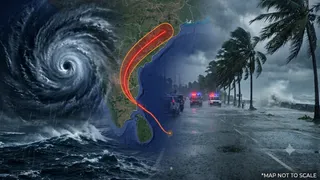
A fresh weather system developing over the Bay of Bengal could intensify into a cyclonic storm by the evening of November 16, according to the India Meteorological Department (IMD). The storm is expected to be named 'Akwan', a name proposed by Iran. In its latest bulletin issued on Saturday, the weather agency said that a low-pressure area over the southeast Bay of Bengal had become more organised and was likely to develop into a depression, followed by a deep depression within the next 24 hours. The system is expected to move north-northwestwards and gradually strengthen into a cyclonic storm over the central Bay of Bengal. The developing weather system has raised concerns about rough sea conditions and strong winds across the region.
IMD Warns of Strong Winds, Fishermen Advised to Avoid the Sea
According to the IMD, the well-marked low-pressure area was located over the southeast Bay of Bengal at 5:30 am on Saturday. Its influence is expected to bring unsettled weather to the Andaman Sea, Andaman and Nicobar Islands and several adjoining parts of the Bay of Bengal. Wind speeds could reach around 60 kmph initially. From November 17, winds are likely to strengthen further, potentially reaching 80 kmph and maintaining similar intensity over the following two days. Considering the possibility of rough to very rough sea conditions, the IMD has advised fishermen operating in the affected areas to return to the coast by November 15. Fishermen have also been warned against venturing into the sea during the advisory period. Authorities are monitoring the system as it develops, while coastal communities and maritime operators are being urged to follow official weather updates and safety instructions.
Third Major Weather System in Recent Weeks
Akwan would be the third significant weather system to affect the Bay of Bengal region in recent weeks, following cyclones Arnab and Murasu in October and November. Both earlier storms made landfall along the Andhra Pradesh coast. On October 28, Cyclone Arnab struck near Narasapur as a very severe cyclonic storm, packing sustained winds of 125-135 kmph and gusts reaching 150 kmph. The storm reportedly claimed at least six lives. Subsequently, Cyclone Murasu made landfall near Ongole in southern Andhra Pradesh on the morning of November 3 as a severe cyclonic storm. Wind speeds at the time were estimated at 100-110 kmph, with gusts reaching 120 kmph. Its impact continued over the following days, bringing very heavy rainfall to coastal Andhra Pradesh and parts of Telangana on November 5. With another system now gaining strength, weather authorities are closely watching developments over the Bay of Bengal.
Cyclone Akwan May Form Over Bay of Bengal by November 16, IMD Issues Alert
TheFearless
14 Nov 2026 · 11:16 PM IST
Related Stories