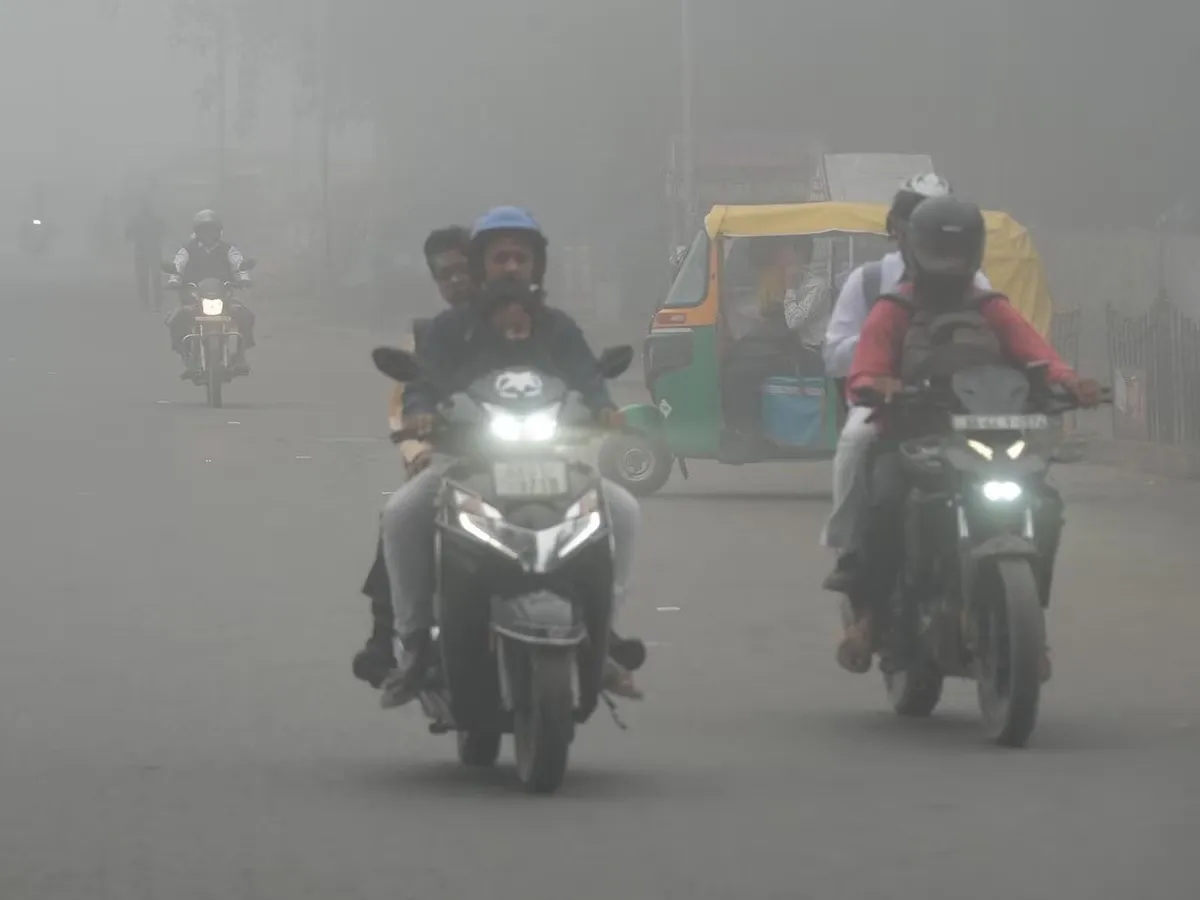
Delhi-NCR residents continue to struggle with poor air quality as pollution remains a major concern in the national capital. Although Delhi witnessed some improvement in its Air Quality Index (AQI) on Monday, November 16, the relief appears temporary. Several areas are still recording pollution levels in the poor and very poor categories. According to forecasts, air quality may deteriorate again over the next 24 to 48 hours. Unfavourable weather conditions and reduced wind speed could prevent pollutants from dispersing, increasing the risk of another spell of severe pollution across the national capital.
AQI Crosses 300 in Several Areas of Delhi
Several parts of Delhi recorded worrying pollution levels on Monday morning. Sirifort reported an AQI of 346, while Dwarka's NSIT area recorded 330, placing both locations in the very poor category. Punjabi Bagh recorded 276, Chandni Chowk 271, ITO 267 and IIT Delhi 258. Anand Vihar also continued to experience poor air quality. Meanwhile, areas such as Lodhi Road and Delhi Cantonment witnessed relatively better conditions. The varying AQI readings indicate that pollution levels are not uniform across the capital, with several residential and commercial areas continuing to face unhealthy air.
Delhi's AQI Improved by 77 Points on Sunday
Delhi recorded a noticeable improvement in air quality on Sunday. According to the Central Pollution Control Board, the city's average AQI stood at 290 at 4 pm on Sunday, compared with 367 on Saturday. This represented an improvement of 77 points in just one day. Increased wind speed and changing weather conditions helped disperse some of the pollutants trapped in the atmosphere. However, environmental experts caution that such improvements may not last long. With pollution sources continuing to contribute to deteriorating air quality, the national capital remains vulnerable to another increase in AQI.
Air Quality May Return to the Very Poor Category from November 17
Forecasts from the air quality early warning system suggest that Delhi's AQI may remain in the poor category on November 16. However, conditions could worsen from November 17, with air quality potentially slipping into the very poor category on November 17 and 18. Lower wind speeds may restrict the movement of pollutants, allowing harmful particles to accumulate near the surface. Vehicle emissions, construction dust, industrial activities and smoke from stubble burning in neighbouring states could further aggravate the situation. Morning and evening hours may become particularly uncomfortable for residents.
GRAP-3 Restrictions Continue as Health Concerns Increase
With pollution levels remaining a serious concern, Stage III of the Graded Response Action Plan (GRAP) continues to remain in force across Delhi-NCR. Restrictions on construction activities and other dust-generating operations are among the measures aimed at controlling pollution. Authorities are also taking steps such as water sprinkling on roads to reduce airborne dust. Health experts advise children, elderly people and those suffering from respiratory illnesses to take extra precautions. Residents should avoid unnecessary outdoor activities and wear suitable masks when stepping outside. Although the recent improvement in AQI has offered some relief, the forecast for the next two days suggests that Delhi's pollution crisis is far from over.
Delhi Air Quality Remains Poor Despite Marginal Relief; Pollution Likely to Worsen Over Next 24 Hours
TheFearless
16 Nov 2026 · 8:15 AM IST

Related Stories