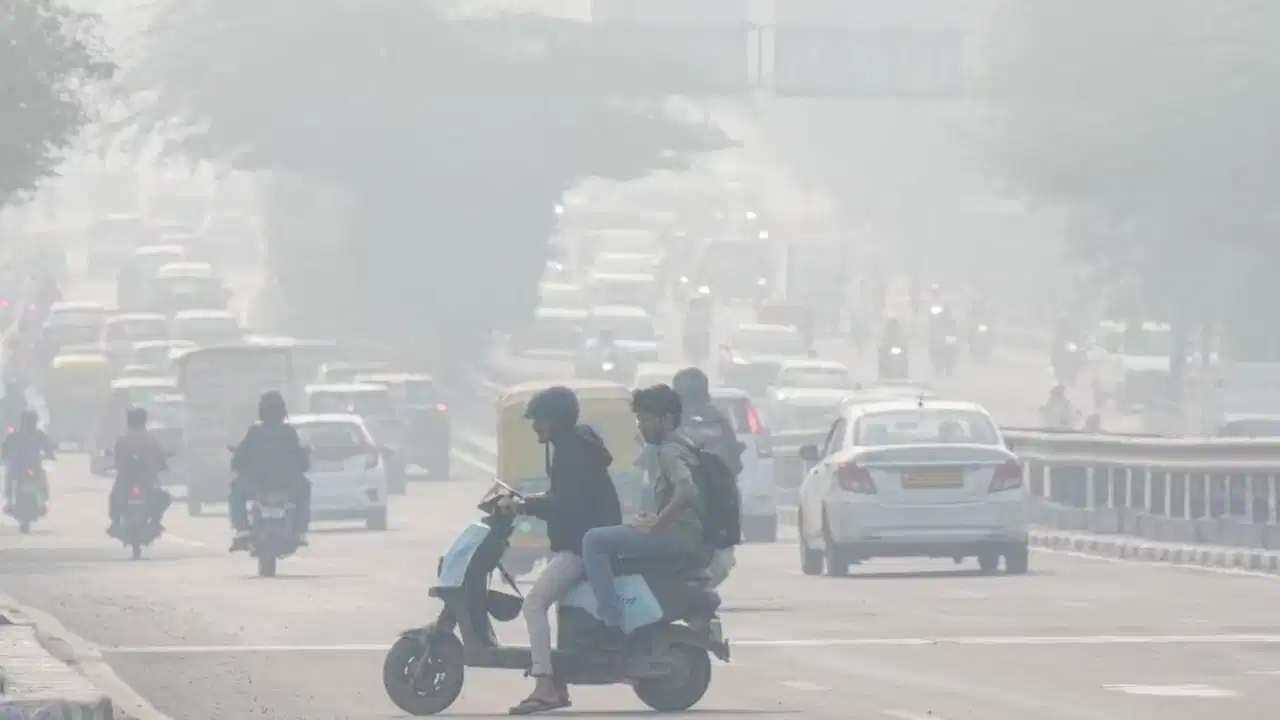
Air pollution worsened across Delhi and the National Capital Region (NCR) on Diwali, with several locations recording dangerously high Air Quality Index (AQI) levels. Despite hopes of relief during the festive season, the national capital continued to experience poor air quality after days of persistent pollution. The situation became particularly concerning as AQI readings crossed 450 in multiple neighbourhoods, placing them in the severe category. Residents reported breathing difficulties and eye irritation due to the polluted atmosphere. Children, elderly people and individuals with existing respiratory problems remained particularly vulnerable. The deteriorating conditions also affected outdoor activities, with many people becoming cautious about spending extended periods outside their homes.
Several Areas Record Severe AQI Levels
According to pollution monitoring data, Delhi's average AQI on Sunday ranged between 364 and 369. The area around India Gate recorded an AQI of 398. However, several other locations reported much higher readings. Mundka registered 428, Okhla 432, Rohini 445, RK Puram 448 and Jahangirpuri reached 450. These figures indicated that pollution levels remained extremely high across different parts of the capital. The variation in readings also highlighted how certain neighbourhoods were experiencing worse air quality than the citywide average.
IIT Delhi and Punjabi Bagh Also Report High Pollution
Other parts of Delhi were also affected by deteriorating air conditions. Areas around IIT Delhi recorded AQI levels ranging from 440 to 452, while Punjabi Bagh and Vivek Vihar also reported readings close to 450. According to monitoring data from the Central Pollution Control Board (CPCB), between 16 and 22 of Delhi's 59 monitoring stations recorded severe air quality at different times. Hazy conditions were also observed in several localities. Many residents were seen wearing masks while travelling through busy roads and public spaces.
Health Concerns Rise Among Residents
The worsening air quality raised concerns about its impact on public health, particularly among children, senior citizens and people suffering from asthma or other respiratory conditions. Health experts have advised vulnerable groups to limit unnecessary outdoor exposure and follow medical guidance. Prolonged exposure to polluted air can increase coughing, breathing discomfort and eye irritation. Residents have also been advised to use appropriate masks when outdoor travel is unavoidable and take precautions to reduce exposure. The severe pollution on Diwali has once again highlighted the growing air-quality challenge facing Delhi-NCR.
Delhi-NCR Suffers Severe Air Pollution on Diwali, AQI Crosses 450 in Several Areas
TheFearless
8 Nov 2026 · 11:03 PM IST
Related Stories