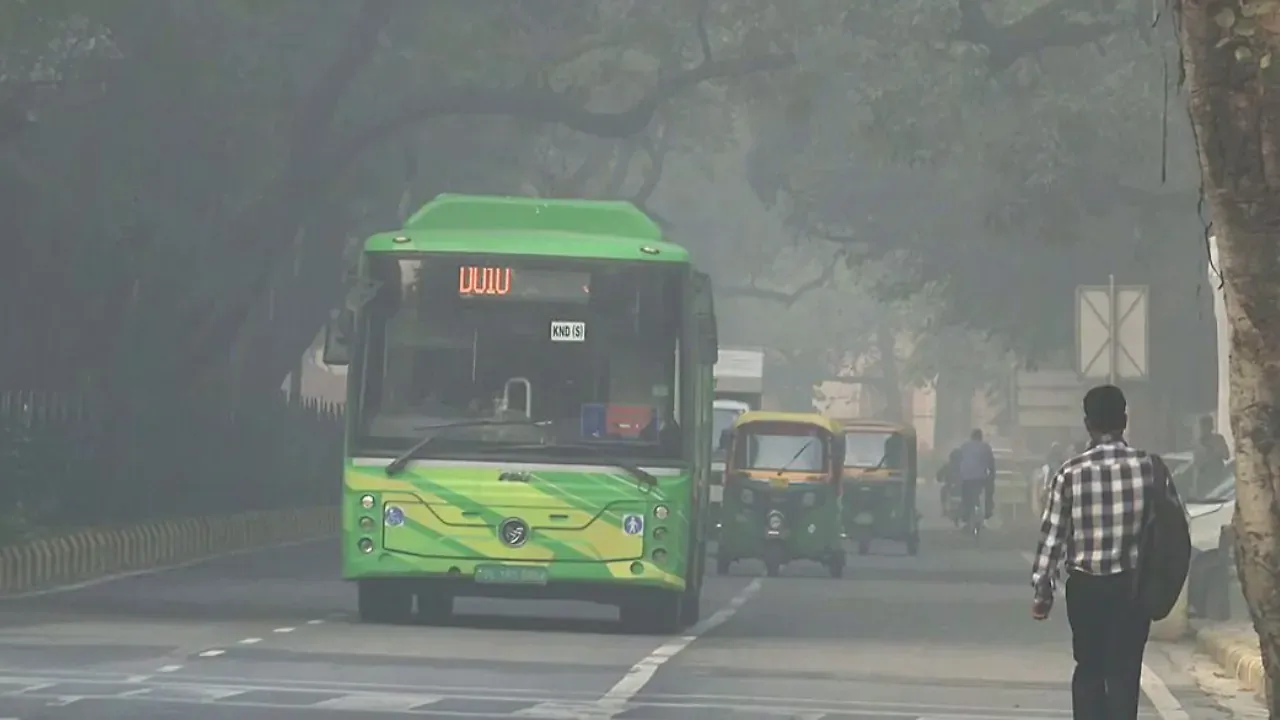
Delhi witnessed a significant improvement in air quality on Sunday, November 15, as the Air Quality Index (AQI) dropped to 111 by 2 PM, offering much-needed relief to residents after several days of severe pollution. Although the reading remained in the 'poor' category, it marked a considerable improvement compared to the previous days. According to available air quality readings, several monitoring stations recorded AQI levels between 100 and 130. The improvement followed a spell of light rainfall, after which the national capital experienced clearer skies and sunshine. Earlier in the morning, however, the situation had been considerably worse. Data from the Central Pollution Control Board (CPCB) showed that Delhi's AQI stood at 353, placing it in the 'very poor' category. The sharp decline over the following hours brought relief to residents who had been struggling with deteriorating air conditions since Diwali. The improvement also represented a positive development after reports of extremely high PM2.5 concentrations in several parts of the city.
Rainfall Helps Reduce Pollution, Residents Get Relief
The India Meteorological Department (IMD) had forecast cloudy conditions and light rainfall across Delhi during the day. The rainfall appears to have contributed to the improvement by helping settle airborne dust and particulate matter. Since Diwali, celebrated on November 8, pollution levels in the capital had remained a major concern, prompting health warnings from authorities and medical experts. Children, senior citizens and people with existing respiratory or other health conditions were considered particularly vulnerable to prolonged exposure. According to CPCB classification, an AQI between 101 and 200 falls under the 'moderate' category, while readings between 301 and 400 are classified as 'very poor'. Therefore, the reported reading of 111 indicated an improvement from the morning's conditions, although it did not mean that the air had become completely clean or free from health risks.
Vehicles, Industries and Construction Dust Remain Major Concerns
Despite the improvement, pollution continues to be a persistent challenge for Delhi because of several contributing sources. Vehicular emissions, industrial activities, construction dust and residential pollution all add to the city's overall pollution burden. According to estimates from the Decision Support System for Air Quality Management in Delhi, transport-related emissions contribute approximately 21.3 per cent to pollution levels. Industrial emissions and residential sources are also significant contributors. Weather conditions, including rainfall and wind movement, can influence pollution concentrations, but sustained improvement requires long-term measures to control emissions. Authorities will continue monitoring air quality, while residents are advised to follow official pollution updates and take appropriate precautions, particularly when air quality deteriorates again.
Delhi Records Best Air Quality Since Diwali, AQI Improves to 111 After Rainfall
TheFearless
15 Nov 2026 · 3:37 PM IST
Related Stories