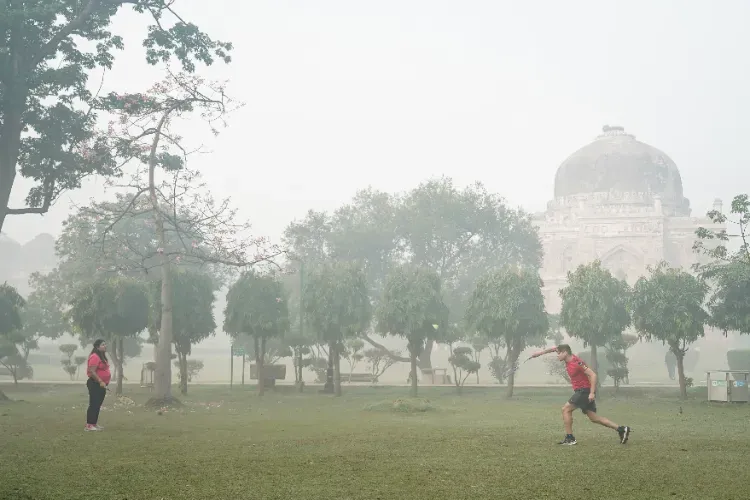
Post Diwali Air Pollution : As soon as the Diwali festival ends, air pollution becomes a serious concern in Delhi-NCR and several parts of North India. Smoke released by firecrackers adds to the pollution that is already present in the atmosphere. This raises a common question: how many days does the air remain polluted after Diwali, and when does it return to normal? An analysis of data from the past 10 years paints a worrying picture.
Pollution Can Last Three To Seven Days
According to the data, air quality in Delhi-NCR can remain in the poor or severe category for three to seven days after Diwali. However, the duration depends on weather conditions each year. When wind speeds are low and there is no rainfall, pollutants remain trapped in the atmosphere for longer. Strong winds and rain, on the other hand, can help disperse or remove pollutants. In 2020 and 2021, the impact of pollution continued for more than five to seven days.
What The Ten-Year Data Reveals
In 2016, Delhi's AQI reached 445 on the day after Diwali and later crossed 480. It took around 10 days for air quality to improve that year. The AQI stood at 403 in 2017, 390 in 2018 and 368 in 2019. In 2020, the figure climbed to 435, while an AQI of 462 was recorded in 2021. Conditions improved somewhat in 2022, with pollution levels beginning to return towards normal winter levels within three days. The AQI reached 358 in 2023 and 360 in 2024. In 2025, Delhi recorded an AQI of 351 after Diwali.
Air Quality Deteriorates Again In 2026
This year, Delhi's air has also deteriorated rapidly after Diwali. On November 8, 2026, the day of Diwali, the city's average AQI was recorded at 376. By November 9, the AQI had crossed 400 in several areas, placing it in the severe category. Some monitoring stations recorded even higher pollution levels. Air quality has also been affected in Ghaziabad, Noida and Gurugram, along with Delhi. As a result, residents may have to wait longer for relief from pollution.
Why Does The Air Take So Long To Clear?
One of the major reasons pollution persists after Diwali is the change in weather conditions. Falling temperatures during October and November can create a temperature inversion. In this situation, cold air remains trapped close to the ground, preventing pollutants from dispersing upwards. Low wind speeds, smoke from stubble burning, vehicle emissions and construction dust further increase pollution levels. When all these factors occur together, it can take several days for the air to clear.
How Many Days Does Air Remain Toxic After Diwali? 10-Year Data Reveals A Troubling Picture
TheFearless
9 Nov 2026 · 4:20 PM IST
Related Stories