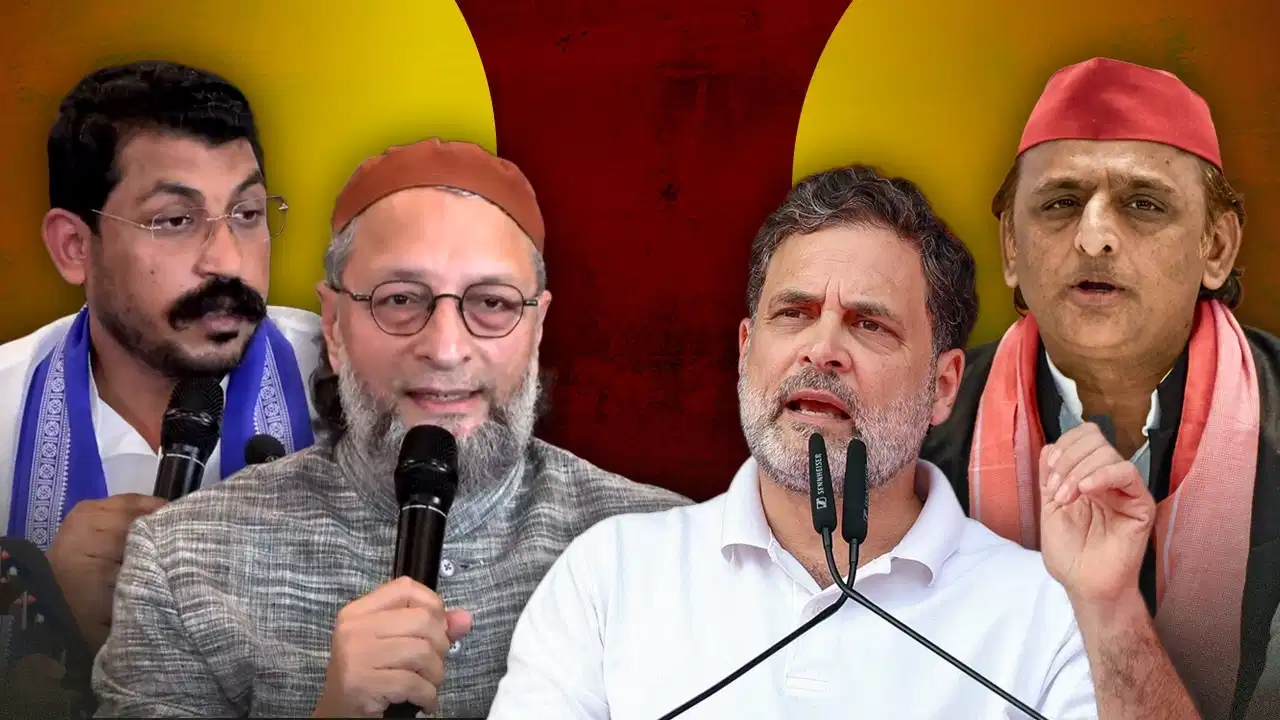
Uttar Pradesh's political landscape is witnessing a new development ahead of the 2027 Assembly elections, with AIMIM chief Asaduddin Owaisi and Azad Samaj Party leader Chandrashekhar Azad joining hands to form the 'Samajik Parivartan Morcha'. The alliance has announced plans to contest all 403 Assembly seats, with Chandrashekhar Azad projected as its Chief Ministerial face. The partnership aims to bring Dalit and Muslim voters together on a common political platform, potentially challenging the Samajwadi Party's PDA (Backward Classes, Dalits and Minorities) strategy led by Akhilesh Yadav. The new formation could influence electoral contests in several constituencies, particularly in western Uttar Pradesh and the Rohilkhand region. However, its actual impact will depend on its ability to convert social support into votes and electoral victories.
Dalit-Muslim Combination at the Centre of the New Strategy
The alliance is banking on the combined strength of Dalit and Muslim communities, which together account for a substantial share of Uttar Pradesh's population. According to the 2011 Census, Scheduled Castes constitute approximately 20.7% of the state's population, while Muslims account for around 19.3%. Together, these groups represent nearly 40% of the population. The political significance of this combination is particularly visible in districts such as Saharanpur, Muzaffarnagar, Meerut, Bijnor, Amroha, Moradabad, Rampur and Sambhal. The SP has been attempting to consolidate these communities through its PDA framework. The new alliance could create competition for the party, especially among voters who support greater political representation for Dalits and Muslims. Chandrashekhar has also appealed to the SP and Congress to join the front, while maintaining that his alliance intends to establish an independent political presence.
What Do Previous Election Results Indicate?
Past electoral figures show that both parties have faced challenges in expanding their influence across Uttar Pradesh. In the 2017 Assembly elections, AIMIM received approximately 0.24% of the votes and failed to win a seat. In 2022, it contested around 95 constituencies, securing approximately 0.49% of the vote share without winning any seat. The Azad Samaj Party contested 111 seats in 2022 and received around 0.13% of the votes. However, Chandrashekhar's political standing changed after his victory from the Nagina Lok Sabha constituency in 2024. He secured 5,12,552 votes and defeated BJP candidate Om Kumar by 1,51,473 votes. Meanwhile, post-poll CSDS-Lokniti survey findings from the 2024 Lok Sabha elections indicated that approximately 92% of Muslim voters in Uttar Pradesh supported the INDIA alliance. The survey also highlighted differences between Jatav and non-Jatav Dalit voting patterns, suggesting that Dalit support is not politically uniform.
Could the New Front Affect SP or Benefit BJP?
The emergence of the alliance could influence the electoral calculations of the SP, BSP and BJP in different ways. If AIMIM attracts a section of Muslim voters and Chandrashekhar succeeds in mobilising Dalit communities, the SP could face competition for sections of its traditional support base. The BSP may also encounter challenges in constituencies where Dalit voters are being approached by the new front. At the same time, vote fragmentation in closely contested constituencies could affect the SP's electoral prospects and potentially benefit the BJP. However, the alliance could also emerge as an independent option for voters seeking alternatives to established political parties. Its performance will depend on candidate selection, organisational strength, local alliances and its ability to attract non-Yadav OBC communities. With Chandrashekhar taking on the responsibility of the Chief Ministerial face and Owaisi focusing on political representation, the 2027 elections will provide the first major test of the alliance's statewide ambitions.
Owaisi-Chandrashekhar Alliance Poses New Challenge to SP's PDA Formula, Who Could Gain or Lose in UP's 2027 Elections?
TheFearless
12 Nov 2026 · 4:14 PM IST
Related Stories