

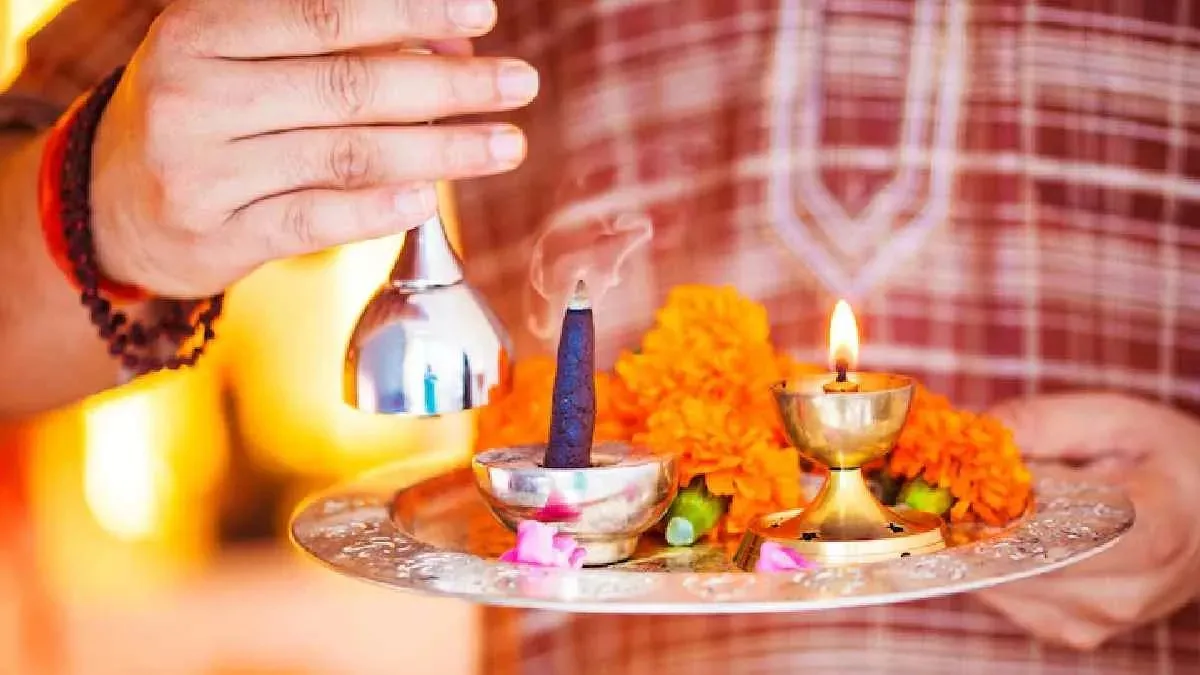
In Hindu tradition, daily worship is considered an important part of life. Many people perform puja at home to seek blessings, peace and happiness for their families. Religious beliefs also place importance on keeping the prayer area clean and treating sacred objects with respect. Certain puja items are traditionally kept on a raised platform or a clean cloth instead of being placed directly on the floor.
Shivling and Shaligram
The Shivling and Shaligram are considered sacred representations of the divine in Hindu worship. According to religious traditions, these objects should not be placed directly on the floor. Instead, they should be kept on a clean platform or cloth in the prayer area. Devotees believe that handling and placing these sacred objects respectfully is an important part of their daily worship.
Idols and Pictures of Deities
Idols and pictures of Hindu gods and goddesses are central to many home temples. Religious customs recommend placing them on a clean shelf, platform or small table. Even when cleaning the temple, devotees are advised not to leave idols or pictures directly on the floor. Keeping them in a clean and respectful place is considered a way of maintaining the sanctity of the prayer space.
Shankh and Puja Diya
The shankh, or conch shell, holds an important place in Hindu rituals and is associated with Lord Vishnu and Goddess Lakshmi. According to traditional beliefs, it should be kept on a clean stand or plate rather than directly on the floor. The same custom applies to a diya used during worship. Devotees are advised to place the lamp on a suitable plate or stand, both before lighting it and after use, to keep it stable and prevent accidents.
Religious Books and Jap Mala
Sacred texts such as the Bhagavad Gita and Ramayana are treated with respect in Hindu households. Prayer beads, commonly known as a jap mala, are also used during chanting and meditation. Traditional customs recommend keeping these items on a clean cloth, shelf or designated stand instead of placing them directly on the floor. This practice reflects respect for religious learning and spiritual activities.
Jewellery, Janeu and Other Puja Items
Gold and silver jewellery, precious stones, the sacred thread known as janeu, Tulsi leaves, flowers, sandalwood paste and religious clothes are also included in traditional lists of items that should be handled carefully. Devotees are encouraged to keep them in clean, designated places during worship. These practices come from religious and cultural beliefs, and customs may vary between families and traditions.