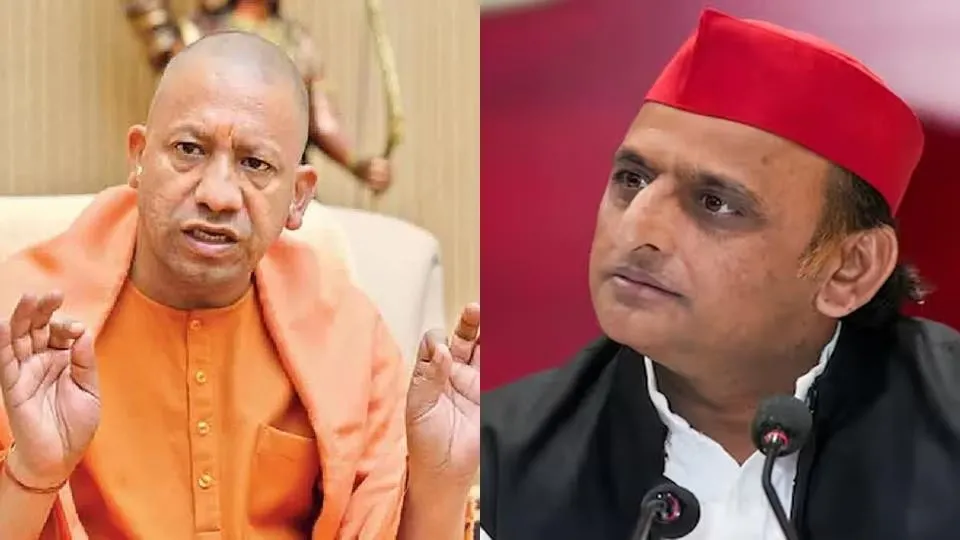
Political preparations for the 2027 Uttar Pradesh Assembly elections have begun gaining momentum, with the Special Intensive Revision (SIR) of electoral rolls emerging as a major issue between the BJP and the Samajwadi Party (SP). The debate is no longer limited to the addition or deletion of voters' names. Both parties are using the exercise to highlight their political priorities and social support bases. Chief Minister Yogi Adityanath has claimed that the share of Muslim voters has increased by 1.65 per cent while the proportion of Hindu voters has declined. SP chief Akhilesh Yadav has questioned the basis of these figures and the Election Commission's role, linking the issue to electoral transparency and the protection of voting rights.
BJP Focuses on Hindu Voter Consolidation
The BJP is attempting to connect the SIR exercise with its broader political narrative of Hindu voter consolidation. Yogi Adityanath's reference to the 80-20 electoral equation has brought the debate over religious voter proportions back into political discussion. The party is also highlighting concerns about eligible voters being left out of electoral rolls. However, the official basis and calculation behind the claimed 1.65 per cent increase in the Muslim voter share have not been clearly established. Yogi has also raised figures concerning deleted names, including people listed in panchayat records and beneficiaries of government schemes. These categories, however, are not directly comparable with Assembly electoral rolls.
SP Seeks to Strengthen Its PDA Strategy
For Akhilesh Yadav, the SIR issue is closely linked to the party's PDA strategy, which focuses on backward classes, Dalits and minorities. He has questioned how the Chief Minister obtained religion-based voter figures when the Election Commission has not publicly released corresponding data. The SP is presenting the issue as a matter of social representation, voting rights and fairness in the electoral process. However, the party will also need to demonstrate its concerns through booth-level monitoring and efforts to ensure that all eligible voters remain on the electoral rolls, irrespective of their community.
Electoral Figures and Political Implications
According to the figures cited in the report, the final electoral roll following the revision contains approximately 13.40 crore voters in Uttar Pradesh. During the exercise, more than two crore names were reportedly deleted, while over 84 lakh new voters were added. The BJP sees the process as an opportunity to strengthen its organisational network at the booth level, while the SP is seeking to mobilise its social support base around voter rights. Congress and the BSP could also influence the political debate, given their respective support bases among different sections of society. As the 2027 elections approach, transparency
SIR Becomes New Political Battleground Ahead of 2027 UP Elections, BJP and SP Focus on Voter Bas
TheFearless
9 Nov 2026 · 10:58 PM IST
Related Stories