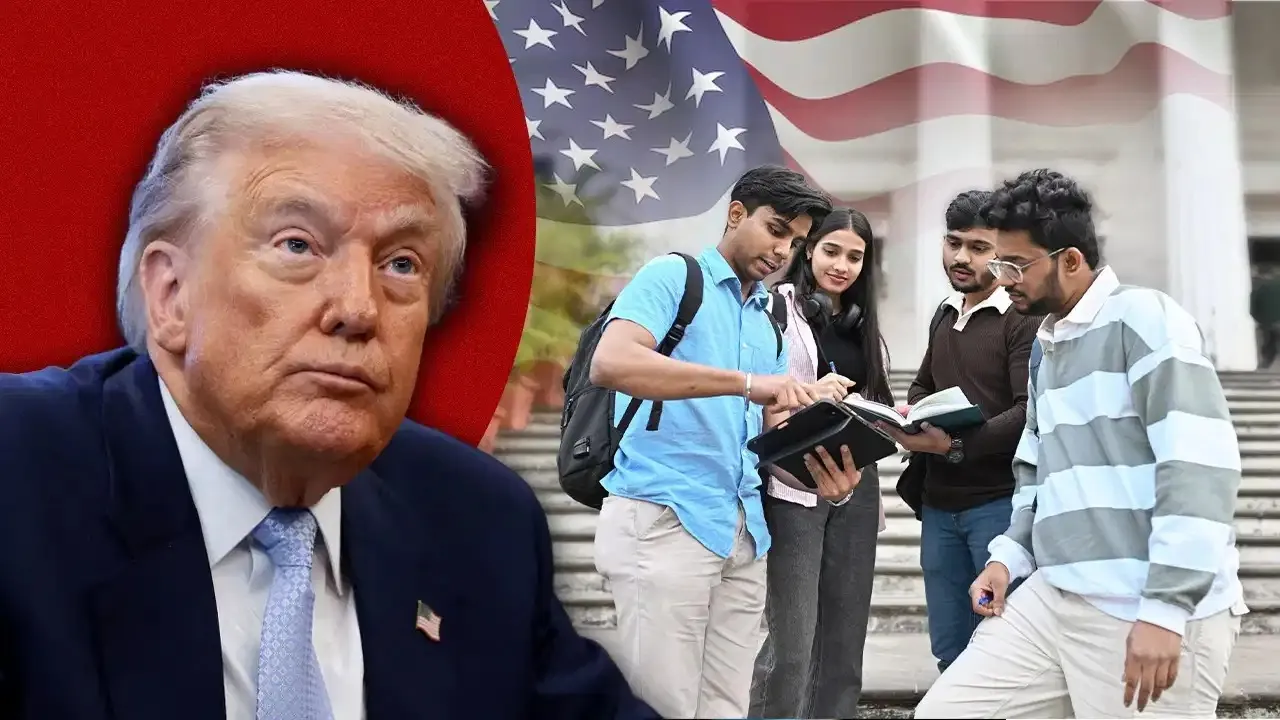
The Trump administration has suffered a major setback after a federal court in the United States rejected its proposal to limit how long foreign students, scholars and journalists could stay in the country. The proposal, introduced by the Department of Homeland Security (DHS) in July 2026, sought to impose fixed time limits based on visa categories. A federal judge in Boston ruled against the plan on Monday, describing it as arbitrary, unreasonable and beyond the department's legal authority. The decision is expected to bring relief to thousands of international students, including Indians studying in the US.
Four-Year Limit for Students
Under the proposed rule, international students on F-1 visas would have been allowed to stay in the US for a maximum of four years. Those requiring additional time would have needed special federal approval. The proposal also sought to reduce the flexibility available to students whose academic programmes required longer periods of study. Judge F. Dennis Saylor rejected the proposal, stating that the DHS did not have unlimited powers to weaken the F-1 visa programme. He observed that Congress had authorised and encouraged educational opportunities for foreign students in the United States.
Journalists Also Faced Restrictions
The proposal was not limited to students. It also sought to reduce the permitted stay for foreign journalists from several years to 240 days. Chinese journalists would have faced an even shorter limit of 90 days. The administration had also proposed reducing the post-study grace period for international students from 60 days to 30 days. This is the period students receive after completing their studies to prepare for their departure from the country. Language programme participants were also facing a proposed overall stay limit of 24 months, including holidays and breaks.
Indian Organisations Welcome Decision
The court's decision has been welcomed by the Foundation for India and Indian Diaspora Studies (FIIDS). Its president and policy and strategy head, Khanderao Kand, said the ruling would help international students and protect the future of American science, technology, research and innovation. The decision is particularly important for Indian students, who form a significant part of the international student community in the US. It also provides relief to families concerned about uncertainty over study duration and visa extensions.
Education Groups Call It a Major Victory
Miriam Feldblum, president and CEO of the Presidents' Alliance on Higher Education and Immigration, described the ruling as a major victory for international students, scholars and educational institutions. She also pointed to concerns about declining international student enrolment and interest in studying in the US. Fanta Aw, executive director and CEO of NAFSA: Association of International Educators, said the ruling reaffirmed the existing Duration of Status policy. Under this policy, international students can generally remain in the country for the duration of their authorised academic programme, subject to visa requirements.
What Happens Next?
The legal battle began after the Boston court temporarily blocked the proposed DHS rule in September. The department subsequently appealed against that order before the First Circuit. On November 3, it also requested a 30-day pause in the appeal process, citing the possibility of a final decision soon. The latest ruling has strengthened the position of international students and educational organisations opposing the restrictions. For Indian students and journalists, the decision offers significant relief, although they must continue to follow existing visa and immigration rules.