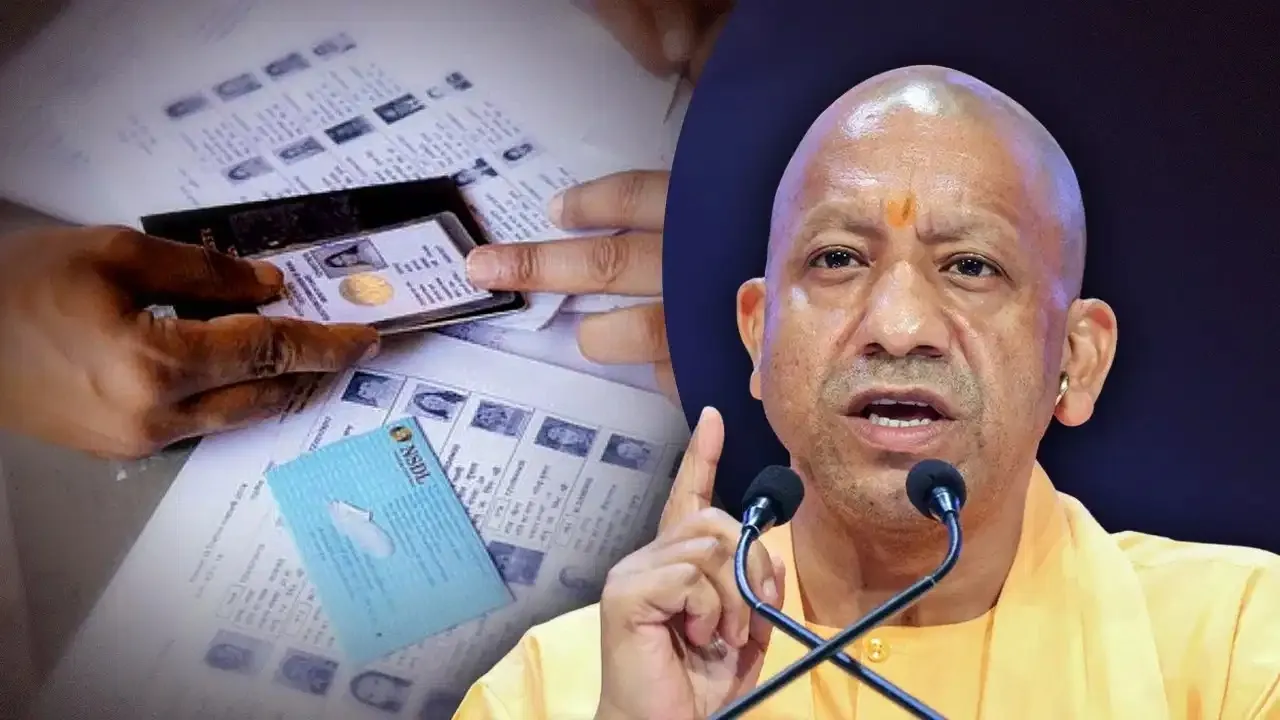
The voter list has become a major concern for the BJP ahead of the 2027 Uttar Pradesh Assembly elections. After the Special Intensive Revision (SIR), the party's internal assessment has reportedly found a significant gap between government welfare beneficiaries and names on the Assembly voter list. According to the assessment, more than 55 lakh potential voters aged 18 and above, who are beneficiaries of government schemes, are missing from the Assembly voter list across several districts. The findings have raised concerns within the party about the possibility of losing voters who could support it.
More Than 55 Lakh Names Missing
The BJP's concern goes beyond its traditional caste and social equations. Over the past decade, welfare schemes launched by the central and state governments have helped build a large beneficiary base, which has become an important part of the party's electoral strategy. Chief Minister Yogi Adityanath has also claimed that around 55 lakh government scheme beneficiaries and 66 lakh people listed in Panchayat voter records are missing from the Assembly voter list. He has additionally mentioned around 4.5 lakh young people aged 18–19 and said that the matter would be taken up with the Election Commission.
44 Districts Show a Major Gap
According to the party's internal survey and comparison of voter records, 44 districts have been identified where the gap between welfare beneficiaries, Panchayat voter records and Assembly voter lists is more than one lakh. These districts are spread across western Uttar Pradesh, Purvanchal, Awadh and Rohilkhand. The list includes areas where the BJP has traditionally been strong as well as districts where the party faced tough electoral contests. Jaunpur has the biggest reported gap, with 2.63 lakh beneficiaries and 2.01 lakh Panchayat-listed names missing from the Assembly list, taking the combined figure to 4.64 lakh. Prayagraj follows with 4.50 lakh, while Ballia has 4.24 lakh and Azamgarh 3.98 lakh.
Top 15 Districts in the Assessment
The reported combined figures show the scale of the gap across several districts. Ghazipur has 3.91 lakh, Deoria 3.72 lakh, Pratapgarh 3.23 lakh, Gorakhpur 3.20 lakh, Kushinagar 3.01 lakh and Varanasi 2.74 lakh. Gonda has 2.44 lakh, Sitapur 2.20 lakh, Meerut 2.02 lakh, Hardoi 1.95 lakh and Aligarh 1.57 lakh. These figures combine two categories: government scheme beneficiaries and names appearing in Panchayat voter records. They represent the party's reported assessment, not a confirmed count of eligible voters whose names have been wrongly removed.
Ayodhya and Seat-Wise Numbers Raise Questions
Ayodhya is another important example for the BJP. The party won the Assembly seat in 2022 by 19,990 votes, while its lead in the 2024 Lok Sabha election within the constituency reportedly fell to around 4,600 votes. The internal assessment claims that more than 16,000 non-minority beneficiaries and around 8,000 Panchayat-listed names are missing from the Assembly voter list in the constituency. The report also says that 16 Assembly seats saw a decline of more than one lakh voters after SIR, and 15 of these seats are held by the BJP or its allies. Another 21 seats recorded a decline of 80,000 to one lakh voters, including 19 seats held by the NDA.
BJP Prepares a Voter Recovery Drive
The BJP is now looking towards the Special Summary Revision (SSR), scheduled to begin on November 17. The draft voter list for all 403 Assembly constituencies is expected on that date. People will be able to submit claims and objections until December 16, while the final voter list is scheduled for publication on January 4, 2027. The party plans to identify eligible people whose names appear in government beneficiary records or Panchayat lists but are missing from the Assembly voter list. Booth-level workers are expected to focus on women, young voters and welfare scheme beneficiaries. The Election Commission has also directed officials to compare Panchayat and urban local body voter records with Assembly lists and help eligible citizens submit Form 6 for inclusion.