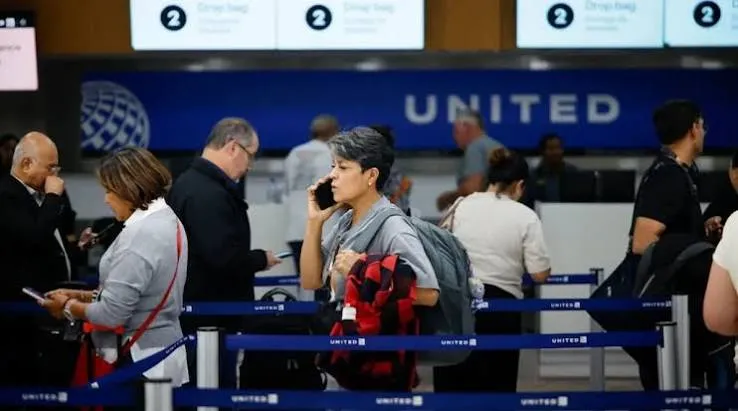
Air travel disruptions in the United States continue to create problems for thousands of passengers. Despite the Federal Aviation Administration (FAA) lifting the temporary nationwide flight restrictions, airline operations have yet to return to normal. On November 15, more than 530 flights were reportedly cancelled, while around 430 others faced delays. The situation has left thousands of passengers stranded at airports across the country. Many travellers have missed connecting flights, while others are being forced to reschedule their journeys. Airlines are struggling to restore normal operations amid widespread disruption.
FAA Technical Glitch Triggered the Aviation Crisis
The crisis began on Friday when a communication-related malfunction affected the Federal Aviation Administration's air traffic control system. Following the disruption, the FAA temporarily halted flights across the country for nearly five hours as a safety precaution. This was among the longest nationwide flight restrictions in the United States since the September 11, 2001, terrorist attacks. The restrictions were lifted at around 8:15 pm on Friday night, but the disruption continued to affect airline schedules over the following days.
New Router Overloaded the Air Traffic Control System
According to US authorities, the problem emerged during the integration of new technology into the air traffic control network. A router malfunction reportedly placed excessive pressure on the communication system, affecting radar and communication services at several air traffic control centres. US Transportation Secretary Sean Duffy said the system was receiving more than 1,000 connection attempts every four to five seconds, creating additional pressure on the network. The technical problem affected 17 of the FAA's 22 en-route air traffic control centres. Officials have indicated that a technical malfunction, rather than a cyberattack, was responsible for the disruption.
Major Airlines Also Face Widespread Disruptions
The aviation crisis has affected several major US airlines, including Delta Air Lines, United Airlines and American Airlines. These carriers cancelled around 25 per cent of their scheduled flights on Saturday. JetBlue reportedly cancelled nearly 45 per cent of its flights. Airlines are now facing the difficult task of repositioning aircraft and crew members to their designated locations. Several planes have ended up at airports different from their scheduled destinations, while the availability of pilots and cabin crew has also become a challenge. Airlines are offering passengers options to rebook their tickets without additional charges.
Flight Operations May Return to Normal by Sunday
FAA Administrator Bryan Bedford has expressed hope that flight operations across the United States could largely return to normal by late Sunday. He also apologised to passengers for the inconvenience caused by the disruption. However, officials have acknowledged that restoring the complete flight schedule may take additional time. Transportation Secretary Sean Duffy has also highlighted the need for a $50 billion investment to modernise America's ageing air traffic control infrastructure. The incident has renewed concerns about the country's aviation infrastructure and its dependence on outdated technology.
US Flight Crisis Continues: 530 Flights Cancelled, 430 Delayed as Thousands of Passengers Stranded
TheFearless
15 Nov 2026 · 8:11 AM IST
Related Stories