E100 Ethanol Conversion : India is promoting ethanol as an alternative to petrol. Meanwhile, on October 26, 2026, the Ministry of Road Transport and Highways amended the Central Motor Vehicles Rules, 1989, to include E100 under the regulations for flex-fuel vehicles. E100 is a fuel that consists almost entirely of ethanol. Following this development, car owners are wondering whether their older petrol cars can also be converted to run on E100. The straightforward answer is that cars designed for regular petrol or E20 should not be driven by simply filling them with E100. The vehicle must be specifically designed and certified for this fuel.
Can Older Petrol Cars Be Converted to E100?
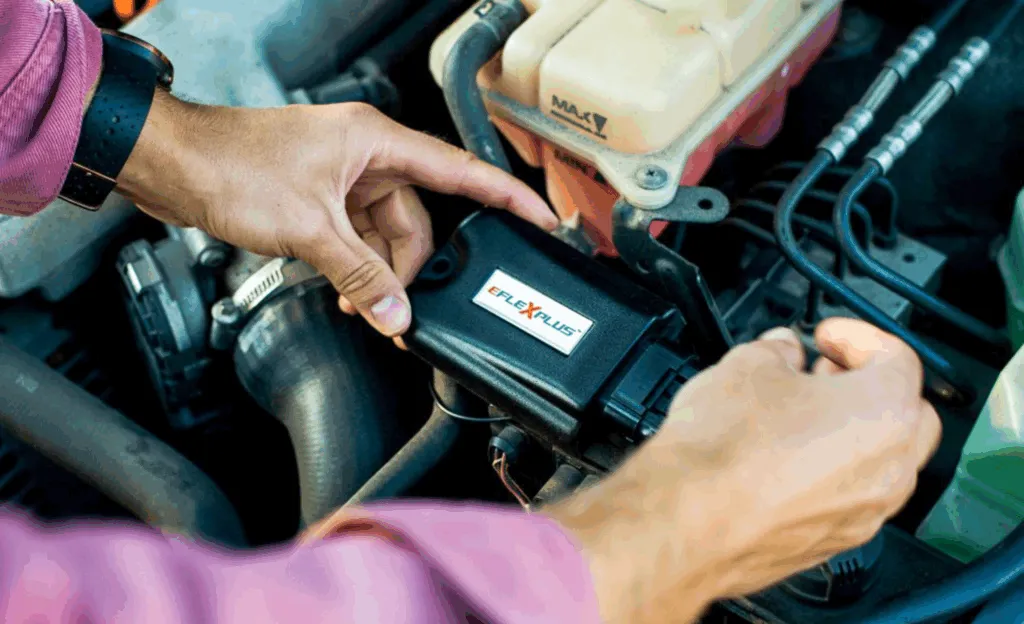
Converting an older petrol car to run on E100 requires more than just modifying its engine. Vehicles need several components adapted to handle fuel containing a high concentration of ethanol. These include the fuel tank, fuel lines, pump, injectors and seals. Changes to the engine control system and its settings may also be necessary. Flex-fuel vehicles feature technology that adjusts engine operation according to the fuel being used. Therefore, simply replacing a few components and filling the car with E100 is neither a safe nor necessarily a legally compliant solution.
What Is the Difference Between E20 and E100?
There is a significant technical difference between E20 and E100. E20 fuel contains approximately 20% ethanol, with the remainder consisting primarily of petrol. E100, on the other hand, consists almost entirely of ethanol. As the ethanol concentration increases, the engine and fuel system require different technical specifications. Therefore, a car compatible with E20 does not automatically become suitable for E100. Using E100 requires the vehicle to meet the necessary technical and safety standards. A car’s fuel compatibility cannot be determined simply by the fact that its engine runs on petrol.
What Do the New Government Rules Mean?
On October 26, 2026, the government amended the Central Motor Vehicles Rules, 1989, to include E100 under the regulations for flex-fuel vehicles. This means a regulatory framework has been established for vehicles specifically designed and certified to use high-ethanol fuels such as E85 or E100. The amendment does not grant general permission to convert all older petrol cars to E100. Including E100 in the rules and making an existing car compatible with E100 are two different matters. Before modifying a vehicle, owners must understand its technical suitability and the applicable legal approval requirements.
Why Are Manufacturer Guidelines Important?
If your car was designed for petrol or E20, you should use only the fuels recommended by its manufacturer. Always check the owner's manual and the fuel-compatibility sticker for relevant information. Filling the tank with E100 without confirming compatibility could damage parts of the fuel system and engine. Furthermore, getting modifications done at an uncertified workshop does not guarantee that the vehicle will remain legally eligible for road use. Before making any technical changes, it is advisable to consult the vehicle manufacturer or an authorised service centre.
What Should You Do Before Using E100?
If you plan to convert your older car to run on E100, first ask the manufacturer whether an approved conversion method is available for your model. Then check the technical modifications required, certification procedures and applicable registration rules. The most important point is that the inclusion of E100 in the regulations does not mean every older petrol car can immediately run on this fuel. Unless the vehicle is confirmed as suitable for E100 and receives the necessary certification, owners should continue using the fuel recommended by the manufacturer.
Can Old Petrol Cars Also Run on Ethanol? Government Rules and Conversion Challenges Explained
TheFearless
28 Oct 2026 · 5:21 PM IST
Related Stories