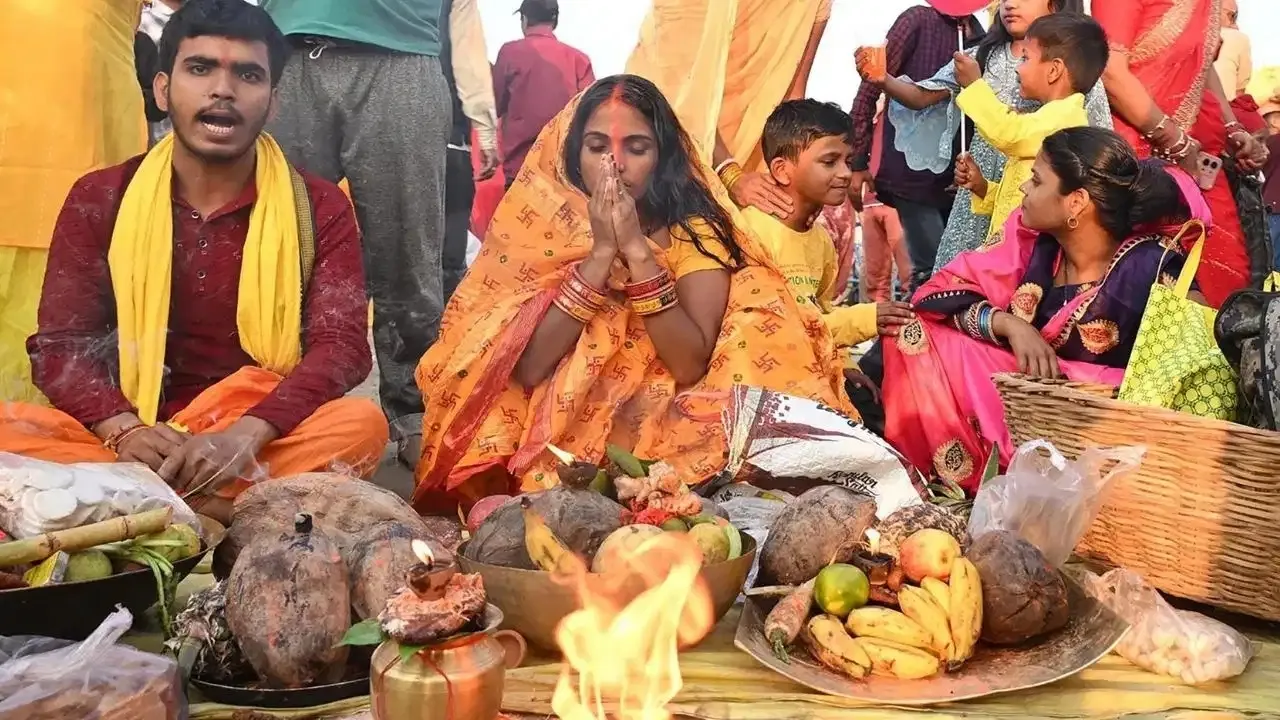
Chhath Puja is one of the major Hindu festivals dedicated to the Sun God and Chhathi Maiya. It is celebrated with great devotion, especially in Bihar, Jharkhand and eastern Uttar Pradesh. The four-day festival begins on November 13, 2026, with Nahay Khay and will conclude on November 16 with prayers and offerings to the rising Sun. During this festival, devotees observe strict rituals and pray for their family's happiness, prosperity and good health.
What Is Nahay Khay?
Nahay Khay is the first day of Chhath Puja and falls on the Chaturthi Tithi of the Kartik Shukla Paksha. On this day, devotees take a bath, clean their homes and prepare a pure, traditional meal. Food is prepared with special attention to cleanliness and purity. The traditional meal mainly includes pumpkin curry, lentils and rice. In some families, radish and jaggery are also included.
Pumpkin, Lentils and Rice
Pumpkin or bottle gourd curry is an important part of the Nahay Khay meal. It is traditionally prepared using pure ghee and rock salt, without garlic or onion. Chana dal or moong dal is also cooked in a simple, traditional way. Arwa rice, which is a variety of raw rice, is prepared as bhat and served with the curry and dal. Some families also include radish and jaggery according to their local traditions.
Foods to Avoid on Nahay Khay
Devotees follow a strict sattvik diet on the first day of Chhath Puja. Garlic and onion are avoided while preparing food. Regular table salt is replaced with rock salt in the traditional meal. Meat, fish and eggs are not consumed. Alcohol and other tamasic foods are also avoided. Devotees are expected to eat freshly prepared food instead of stale or leftover meals.
Important Rituals and Traditions
Devotees wake up early on Nahay Khay and take a bath. Some visit rivers or other sacred water bodies, while others perform the ritual at home. After bathing, they clean the house and kitchen. Devotees then remember the Sun God and take a vow to observe the four-day festival with discipline and devotion. The food is prepared in a clean place, traditionally using pure ghee.
Why Does the Devotee Eat First?
After the meal is prepared, it is first offered to God as part of the traditional ritual. The devotee then eats the food, after which other family members can have it as prasad. Along with food restrictions, devotees are expected to maintain discipline, cleanliness and good thoughts throughout the festival. These traditions mark the beginning of Chhath Puja and prepare devotees for the difficult fasting rituals that follow.