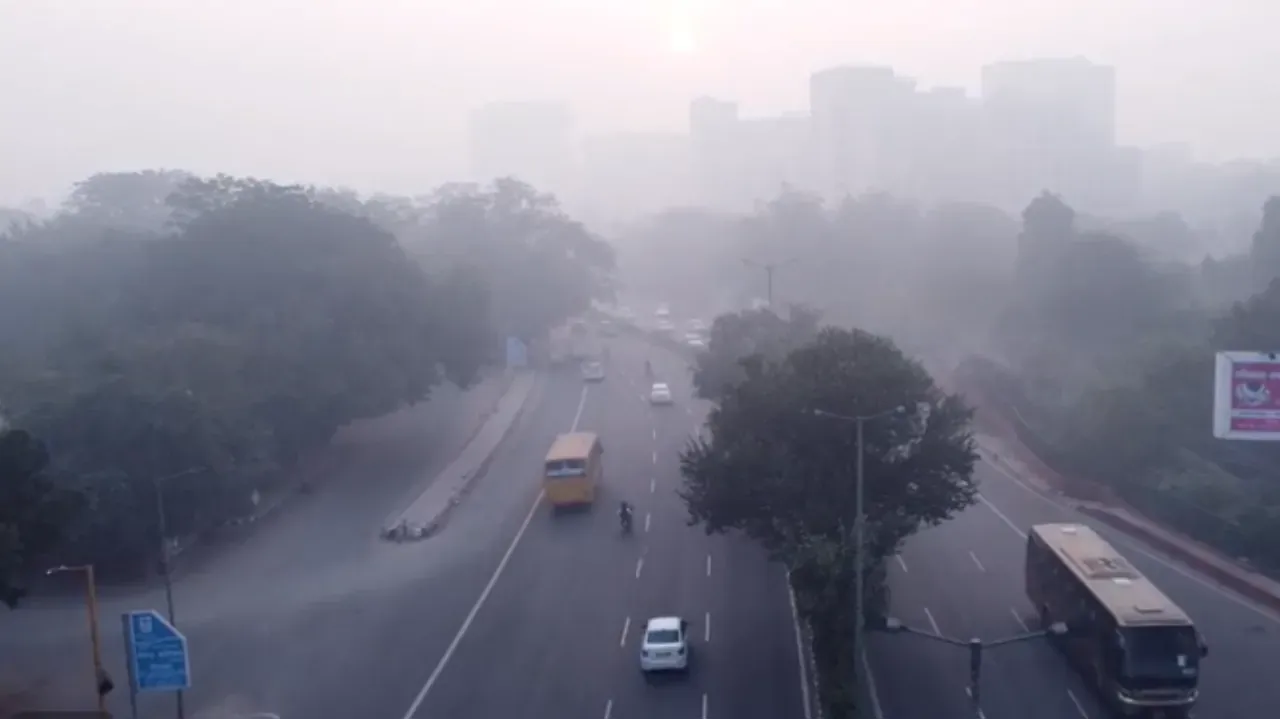
Delhi witnessed a slight improvement in air quality on Wednesday, November 18, a day after the Commission for Air Quality Management (CAQM) withdrew restrictions under Stage III of the Graded Response Action Plan (GRAP). According to the available readings, the national capital recorded an Air Quality Index (AQI) of 212 at 5 AM, keeping it in the 'Poor' category. Although pollution levels have declined in several parts of the city, the overall situation continues to remain a concern for residents. The improvement comes after days of rising pollution during the winter season, which was further aggravated by emissions following Diwali celebrations.
AQI Situation Across Major Areas of Delhi
Several monitoring stations across Delhi reported different pollution levels on Wednesday morning. Chandni Chowk recorded an AQI of 292, while Sirifort stood at 278 and IIT Delhi at 250. Burari registered 249, followed by Alipur at 235, Rohini at 233 and Aya Nagar at 234. Anand Vihar recorded 206, while Vivek Vihar and JNU reported AQI levels of 225 each. IGI Airport Terminal 3 recorded 191, while Jawaharlal Nehru Stadium registered 152. These readings indicate that some locations have moved from the 'Very Poor' category to 'Poor', while a few areas have entered the 'Moderate' category.
GRAP-3 Restrictions Withdrawn, Earlier Measures Continue
The CAQM withdrew GRAP Stage III restrictions on Tuesday after pollution levels showed a downward trend. These restrictions had been introduced across the National Capital Region on November 6, when Delhi's air quality entered the 'Severe' category. Before that, Stage I measures were implemented on October 21, followed by Stage II on November 2. The first stage was introduced when the AQI reached 244, while Stage II followed after it crossed 300. Despite the withdrawal of Stage III restrictions, measures under GRAP Stages I and II will remain in force. Authorities have also clarified that the directions issued on October 30 will continue to apply.
Delhi Gets Slight Relief From Pollution, AQI Improves After GRAP-3 Withdrawal
TheFearless
18 Nov 2026 · 2:25 PM IST

Related Stories