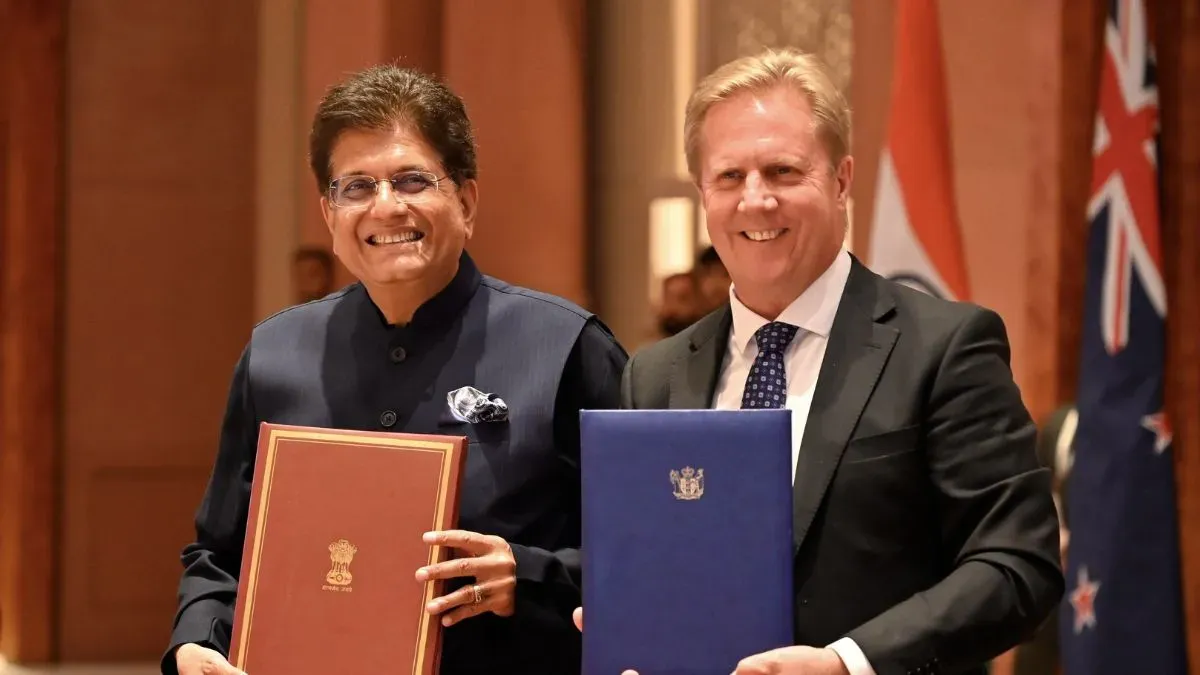
India New Zealand FTA : The free trade agreement (FTA) between India and New Zealand came into effect on October 20, 2026. The agreement opens the way for Indian exporters to access the New Zealand market without tariffs on eligible goods. It is expected to create opportunities for business expansion, investment and employment. Sectors such as textiles, footwear, leather, engineering products, pharmaceuticals and automotive components could benefit. However, the actual gains will depend on market demand and the conditions of the agreement.
Target Set to Expand Trade by 2030
India and New Zealand have set a target of increasing bilateral trade in goods and services to NZ$7 billion by 2030. This has been reported as approximately Rs 37,792 crore. New Zealand has also committed to helping facilitate US$20 billion in investment in India over the next 15 years. Such investment could create opportunities in manufacturing, business and other economic sectors. However, the actual level of investment will depend on projects and commercial decisions made in the coming years.
https://twitter.com/PIBHindi/status/2112457785858199609
Textile Medicine and Footwear Sectors May Benefit
Under the agreement, Indian products are expected to gain access to New Zealand with reduced or zero import duties. This could help exporters of textiles, footwear, leather goods, pharmaceuticals, engineering products and automotive components compete more effectively. Lower tariffs may make Indian goods more competitively priced and help businesses reach new customers. Higher exports could also support production and employment growth. However, the scale of these benefits will depend on companies' capabilities and demand in the market.
Students and Professionals May Find Opportunities
The agreement is also expected to create potential opportunities for Indian students and skilled professionals. Provisions related to temporary employment and professional mobility could allow eligible individuals to explore work opportunities in New Zealand. Meanwhile, certain New Zealand products, including apples, kiwifruit, manuka honey and albumin, may receive tariff concessions in India subject to quotas or other conditions. India has excluded sensitive sectors such as dairy, sugar and edible oils from tariff concessions to protect domestic producers.
Customs Clearance Set to Become Faster
The agreement also includes provisions intended to speed up customs clearance. Under the prescribed arrangement, general cargo is to be cleared within 48 hours, while express consignments and perishable goods are to be cleared within 24 hours. Eligible exporters may also benefit from digital certification and self-certification under rules of origin. New Zealand Prime Minister Christopher Luxon described the agreement as important for the growth of both economies. Its impact will become clearer through actual trade, investment and employment figures over time.