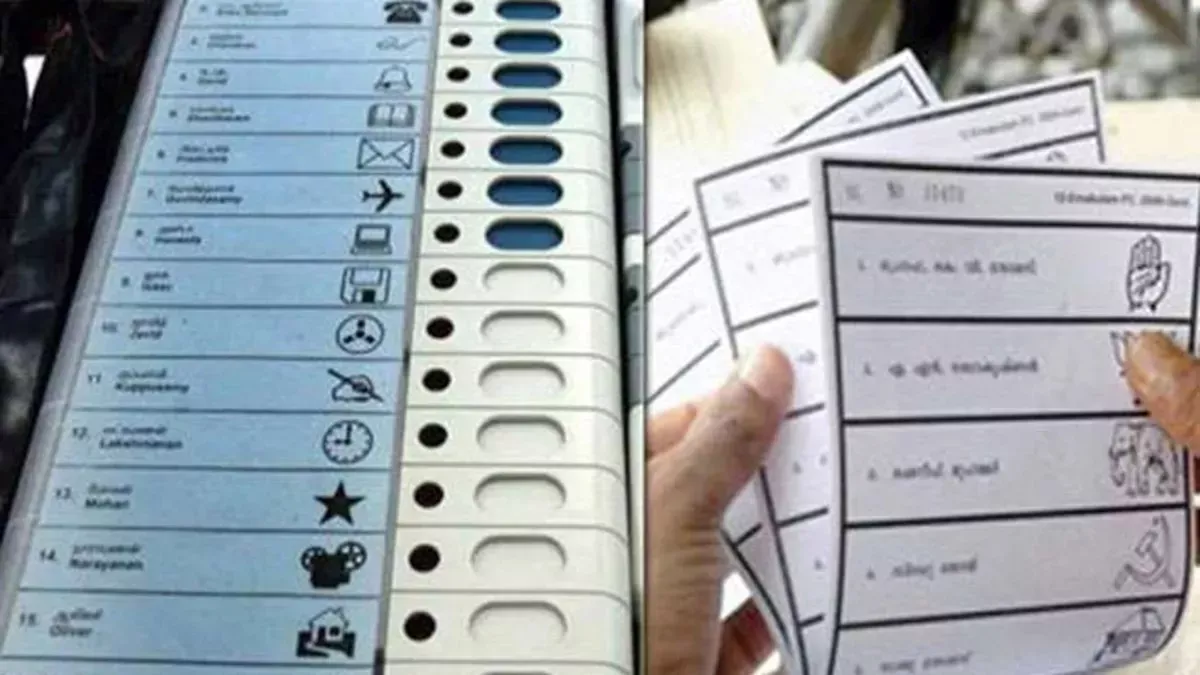
MLC Election Voting Process : Elections for Legislative Council, or MLC, seats are being held in four Indian states: Uttar Pradesh, Bihar, Maharashtra and Karnataka. A total of 28 seats are going to the polls, including 11 in Uttar Pradesh, eight in Bihar, five in Maharashtra and four in Karnataka. One notable feature of these elections is the use of ballot papers instead of Electronic Voting Machines (EVMs). In regular Assembly elections, voters generally press a button on an EVM to cast their votes. This raises an important question: why is a different system used for MLC elections? To understand the reason, it is necessary to know how Legislative Councils work and how their elections are conducted.
What Is a Legislative Council in India?
MLC stands for Member of the Legislative Council. In states that have a Legislative Council, it serves as the second chamber of the state legislature. Just as Parliament has the Lok Sabha and Rajya Sabha, these states have both a Legislative Assembly and a Legislative Council. However, the methods used to elect members to the two chambers are different. In Assembly elections, ordinary voters elect legislators from their constituencies. Legislative Council members, on the other hand, are elected through different categories of electorates. Some are elected by MLAs, elected representatives of local authorities, graduates and teachers, while a certain number are nominated by the state Governor.
Who Is Eligible to Vote in MLC Elections?
Voting arrangements vary depending on the type of Legislative Council seat. For some seats, MLAs cast their votes, while others are elected by members of local authorities. In graduate and teachers’ constituencies, eligible and registered voters participate in the election. Eligible graduates must have their names included in the relevant electoral roll. Similarly, teachers must meet the prescribed requirements and be registered as voters in the teachers’ constituency. This means that not every ordinary voter in the state can participate in these elections. Voting eligibility depends on the relevant constituency and the rules governing its electoral roll.
How Does the Preference-Based Voting System Work?
For certain Legislative Council seats, voters do not simply select one candidate. Instead, they can indicate their preferences among the candidates. This system is known as the Single Transferable Vote (STV). For example, if four candidates are contesting a seat, a voter may mark 1 against their first preference, 2 against their second preference and 3 against their third preference. Marking a first preference is essential, while additional preferences may be optional under the applicable rules. This system allows voters to indicate not only their preferred candidate but also their subsequent choices if their vote needs to be transferred during counting.
How Are Votes Counted in These Elections?
Under this system, the winner is determined according to the applicable quota of votes required for election. If a candidate secures the required quota through first-preference votes, they may be declared elected. If no candidate reaches the quota, the candidate with the fewest votes may be eliminated according to the prescribed rules. Ballot papers cast for that candidate are then examined for subsequent preferences, and votes may be transferred to other candidates accordingly. This process can continue until a candidate reaches the required quota or the result is determined under the applicable election rules. As a result, counting in these elections can differ significantly from the process used in ordinary Assembly elections.
Why Are Ballot Papers Used Instead of EVMs?
The main reason lies in the voting procedure currently used for these elections. In a conventional EVM-based election, voters press the button corresponding to their chosen candidate. In preference-based voting, however, voters must mark their choices in order of preference on a ballot paper. During counting, the first preferences are considered, followed by subsequent preferences when required under the rules. Ballot papers are being used for these elections under the existing electoral arrangements. This does not mean technology could never be used for such a process. Rather, the current system uses ballot papers to record preferences and facilitate the transfer of votes during counting.
Why Are Ballot Papers Used in Legislative Council Elections While Assemblies Use EVMs? Voting and Counting Explained
TheFearless
23 Oct 2026 · 2:51 PM IST
Related Stories