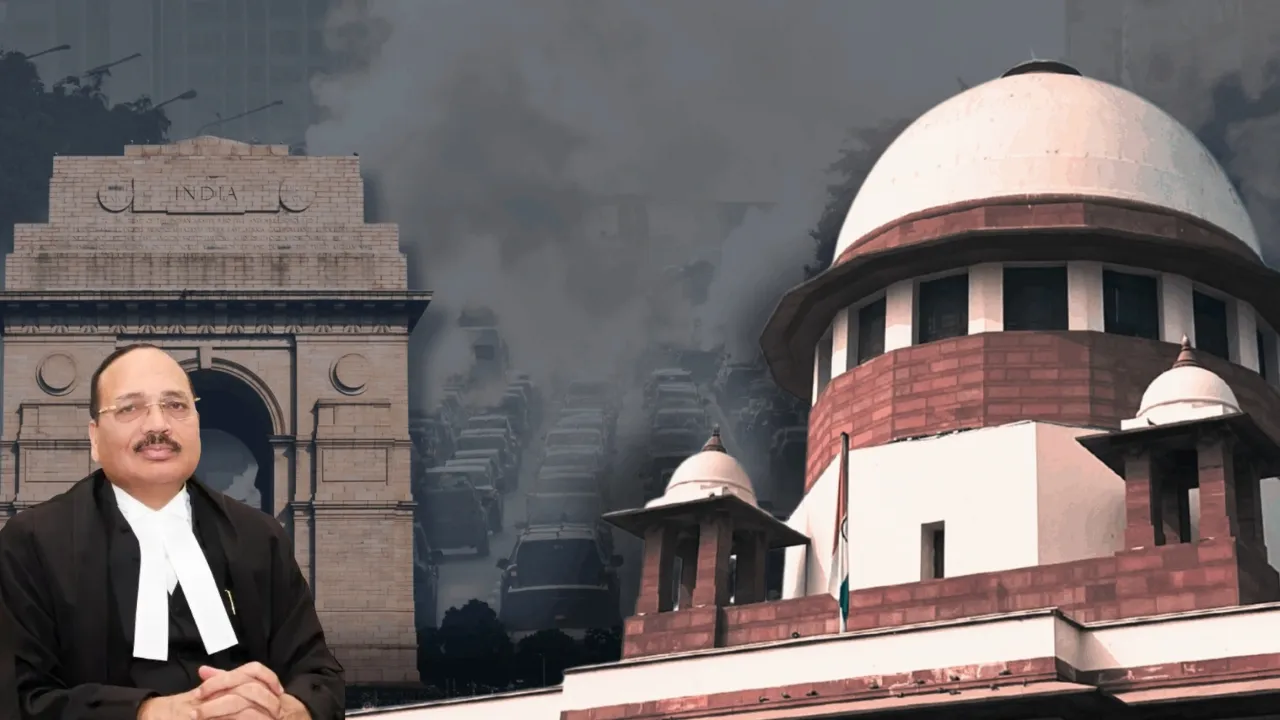
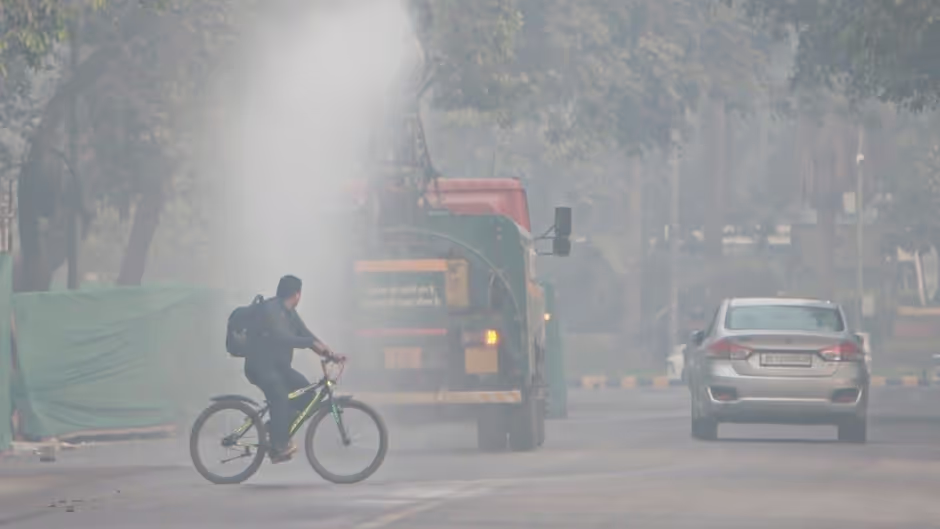
The Supreme Court on Friday expressed serious concern over worsening air pollution in Delhi-NCR and stressed the need for immediate action to improve air quality. Hearing a suo motu case on the pollution crisis, a bench headed by Chief Justice of India (CJI) Surya Kant, along with Justices Joymalya Bagchi and V. Mohana, highlighted vehicular emissions, traffic congestion and inadequate public transport as major contributors to the problem. During the hearing, the CJI remarked that instead of discussing an ideal Air Quality Index (AQI) of 100 or below, authorities should first focus on bringing pollution levels down from around 400. The court also heard submissions suggesting that pollution exposure in the region was comparable to smoking around 30 cigarettes a day. The CJI observed that recent rainfall had temporarily improved air quality.
Supreme Court Flags Vehicle Emissions and Traffic Congestion
During the proceedings, senior advocate Aparajita Singh, assisting the court as amicus curiae, argued that vehicular pollution was one of the major sources of Delhi's deteriorating air quality. She pointed out that stubble burning accounted for around 14 per cent of pollution on November 5, but stressed that the capital already faced significant pollution from local sources. The CJI also expressed concern over bumper-to-bumper traffic on roads connecting Delhi with neighbouring NCR cities. He questioned whether the existing public transport system was sufficient to reduce dependence on private vehicles. The court was also informed that an earlier direction concerning toll plazas had not been fully implemented, resulting in traffic queues and additional vehicle emissions at Delhi's borders.
Court Seeks Better Financial Support for Farmers
The issue of stubble burning also came up during the hearing. The CJI questioned whether farmers were receiving adequate financial and logistical assistance to manage crop residue without burning it. Singh argued that merely providing agricultural machinery was insufficient because many farmers could not afford the fuel needed to operate the equipment. She also highlighted difficulties faced by farmers with small landholdings. The CJI suggested that expensive machinery could be made available through gram panchayats so that farmers could access it collectively instead of purchasing it individually.
Supreme Court Suggests a Market for Crop Residue
The bench also proposed creating a system through which farmers could sell or store agricultural residue instead of burning it. The CJI suggested that authorities should announce procurement prices for stubble in advance and develop proper warehousing facilities. According to the court, giving crop residue economic value could encourage farmers to preserve and sell it rather than set it on fire. The Additional Solicitor General informed the bench that several initiatives were already underway, including financial incentives for farmers and efforts by Haryana to reduce farm fires. He assured the court that its suggestions would be discussed with the Agriculture Ministry. The hearing highlighted the need for a coordinated approach involving transport reforms, stronger public infrastructure and practical support for farmers to tackle Delhi-NCR's pollution crisis.
Forget the Target of 100 for Now': Supreme Court's Strong Message on Delhi's Toxic Air, Focus on Bringing AQI Below 400
TheFearless
6 Nov 2026 · 3:18 PM IST
Related Stories