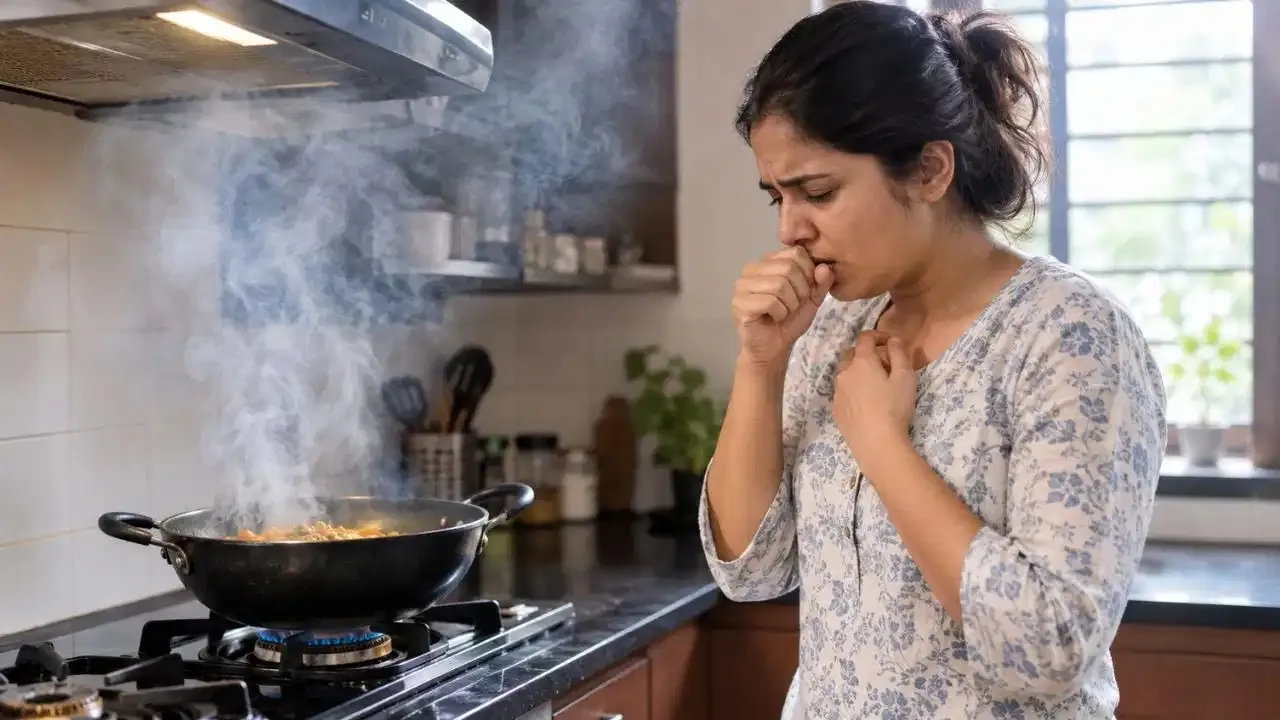
Air pollution is often associated with vehicle exhaust, factory smoke and the smog that covers Delhi-NCR during winter. However, indoor air can also become polluted, including in the kitchen where families prepare their meals. Gas stoves release pollutants during combustion, while frying, roasting and cooking at high temperatures can send smoke and tiny particles into the air. Without proper ventilation, these pollutants may accumulate indoors and affect the health of people living in the house.
Harmful Gases Released While Cooking
Liquefied petroleum gas (LPG) is widely used in Indian kitchens. Burning it can release nitrogen dioxide, a gas that may irritate the respiratory system. Incomplete combustion can also produce carbon monoxide, a poisonous gas. Meanwhile, cooking with very high heat, burning food and overheating oil can increase the amount of smoke and fine particles in the air. Small kitchens with closed windows and poor ventilation may allow these pollutants to remain indoors for longer periods.
Coughing and Breathing Problems
Exposure to indoor air pollution can cause symptoms such as coughing, throat irritation, eye irritation, headaches and breathing difficulties in some people. Those living with asthma or other respiratory conditions may be particularly vulnerable. Children and older adults also need extra care because of their potential sensitivity to poor air quality. Carbon monoxide is especially dangerous because it has no colour or smell. High exposure can cause headaches, dizziness and weakness, and severe poisoning can lead to unconsciousness or become life-threatening.
Expert Recommends Better Kitchen Ventilation
Pulmonary health expert Dr Priyanka Bindroo of Pacific OneHealth Hospital emphasises the importance of maintaining good indoor air quality. Opening a kitchen window while cooking, where possible, can help improve airflow. An exhaust fan or a properly installed kitchen chimney can help remove smoke and cooking pollutants. These devices should be used correctly and cleaned regularly to maintain their effectiveness. Good ventilation is particularly important in small kitchens where air can become trapped.
Check Your Gas Stove and Cooking Habits
Regularly inspect your gas stove and arrange for repairs if the flame remains yellow or orange instead of burning normally blue. Have any problems checked by a trained professional. Avoid overheating cooking oil or allowing food to burn, as both can generate additional smoke and particles. Never leave a gas burner unattended, and turn it off after use. If you smell gas, avoid lighting flames or operating electrical switches, leave the area if necessary and contact the appropriate gas emergency service.
Protect the Air Inside Your Home
Reducing exposure to pollution requires attention to indoor as well as outdoor air. Wearing a mask outdoors or limiting time outside may not address pollutants generated inside the kitchen. Regular ventilation, a properly functioning exhaust system, safe gas-stove use and careful cooking practices can all help reduce exposure. People who experience persistent coughing, wheezing or breathing difficulties should seek medical advice. Keeping indoor air cleaner is an important step towards protecting the health of the entire family.