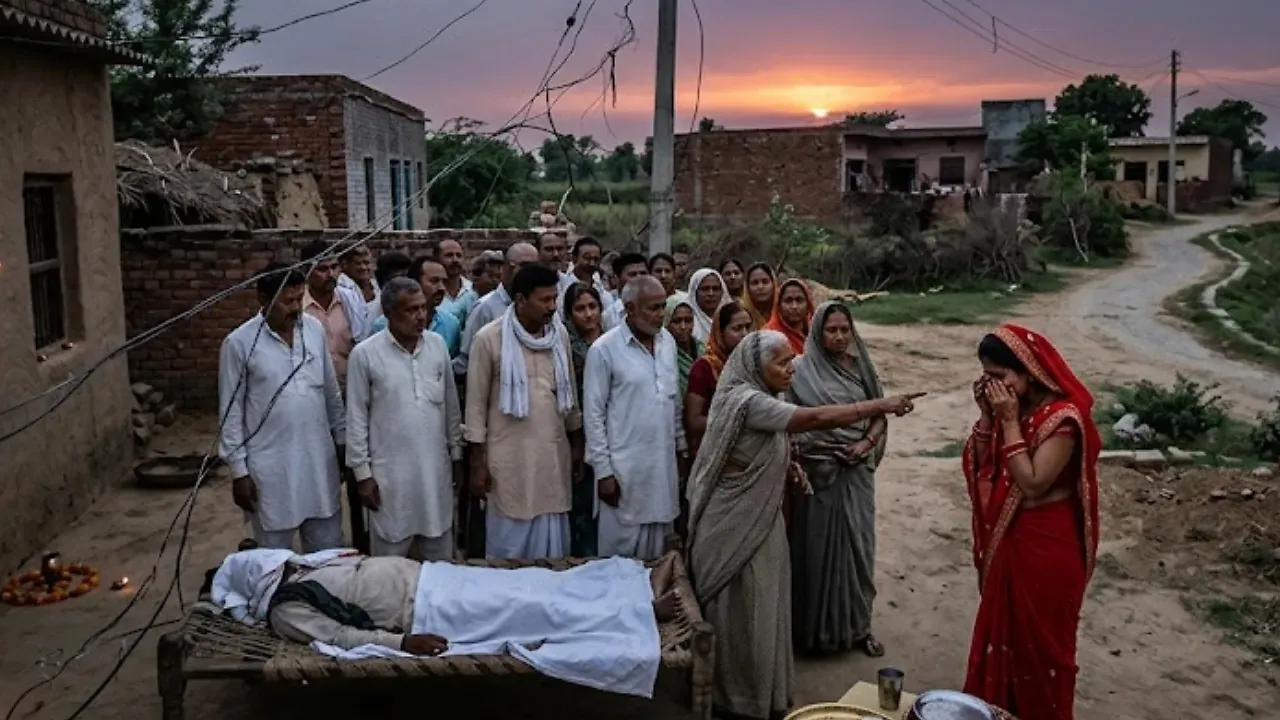
A shocking incident reported from a hospital emergency room has triggered widespread outrage on social media, raising questions about superstition and the treatment of women in society. According to a social media post by an MBBS intern, a man who was brought to the hospital on October 29, during the Karva Chauth festival, had died due to electrocution. His wife, who was observing the traditional fast for her husband's well-being, was also present at the hospital. However, instead of supporting the grieving woman, her in-laws allegedly began questioning whether she had eaten anything during the fast.
Mother-in-Law Allegedly Blames Daughter-in-Law
The intern, who claimed to be on emergency duty that day, said the deceased man's mother repeatedly asked his wife, "Tune kuch khaya hai pakka?" (You must have eaten something). The woman, who was already distressed by her husband's death, reportedly denied breaking her fast while crying. According to the intern, other family members also joined in blaming the wife, suggesting that the man's death was connected to her allegedly eating during Karva Chauth. The intern expressed disbelief at the accusations, pointing out that the man had died due to electrocution and that there was no connection between his death and his wife's fasting practices. She described the incident as deeply disturbing and criticised the persistence of superstitious beliefs.
Social Media Users Express Anger
The incident was shared on Instagram by a user identified as Dr Akansha Singh and quickly attracted reactions from social media users. The intern also questioned the mindset prevailing in some communities, saying that despite living in the 21st century, people continue to follow outdated beliefs. Several users condemned the family's alleged behaviour and expressed sympathy for the grieving woman. One user commented that society often blames victims without understanding their suffering, while another compared modern times with centuries-old thinking. Others argued that women continue to face unfair expectations and social pressure in the name of traditions. However, Times Now stated that it could not independently verify the details of the incident or the authenticity of the viral post.
Man Dies of Electrocution on Karva Chauth; Family Blames Wife for Allegedly Breaking Fast
TheFearless
2 Nov 2026 · 3:18 PM IST
Related Stories