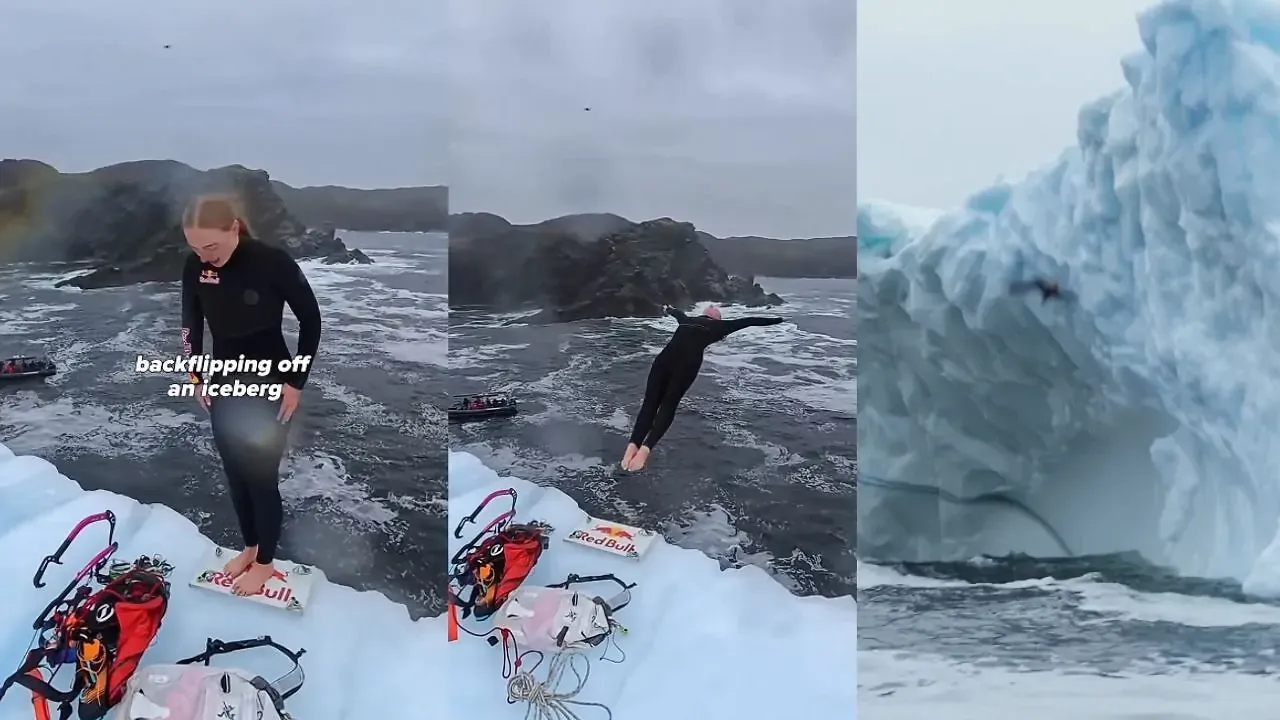
Canadian high diver Molly Carlson has made history by becoming the first woman to dive from a free-standing iceberg, plunging nearly 15 metres into the freezing Atlantic Ocean off the coast of Newfoundland. Wearing a wetsuit, Carlson performed a backward dive from the icy formation in an extraordinary feat documented by Red Bull.
The challenge involved much more than the jump itself. Carlson had to climb the slippery iceberg and reach a suitable launch point before taking the plunge. She was supported by Canadian climber and paraglider pilot Will Gadd, whose experience with icy terrain helped her prepare for the demanding undertaking.
Red Bull released footage showing Carlson climbing the iceberg alongside Gadd before completing the dive. Despite her experience as a high diver, she admitted that the challenge tested her courage in ways she had never experienced before. “This is definitely the scariest thing I’ve ever done,” Carlson said in a YouTube documentary about the project.
Training for a Dangerous Iceberg Dive
Before attempting the dive, Carlson trained with Gadd to learn how to navigate icy surfaces. Her preparation included practising with crampons and ice tools, climbing frozen terrain and maintaining balance on slippery ground.
The risks were significant. Gadd warned that icebergs can overturn without warning, potentially creating extremely dangerous conditions. “The biggest hazard is that icebergs can roll over. When they roll over, it’s super violent,” he explained.
With guidance from Gadd and support from a team of experts, Carlson selected an appropriate iceberg and prepared for the jump. After completing the nearly 15-metre plunge, she faced another challenge: getting clear of the freezing water.
Recalling the moments after resurfacing, Carlson said she remembered telling herself to swim and move away from the iceberg.
Beyond the Record: A Message About Fear and Anxiety
For Carlson, the achievement represented more than a sporting milestone. She drew a comparison between icebergs and human emotions, explaining that much of what lies beneath the surface is invisible to others.
She said the iceberg symbolised how fears and anxieties can remain hidden, even when people appear confident on the outside. Carlson hoped her experience would encourage others to acknowledge their insecurities instead of concealing them.
Molly Carlson Makes History With Nearly 15-Metre Dive From Iceberg Into Freezing Atlantic Ocean
TheFearless
24 Oct 2026 · 3:26 PM IST
Related Stories