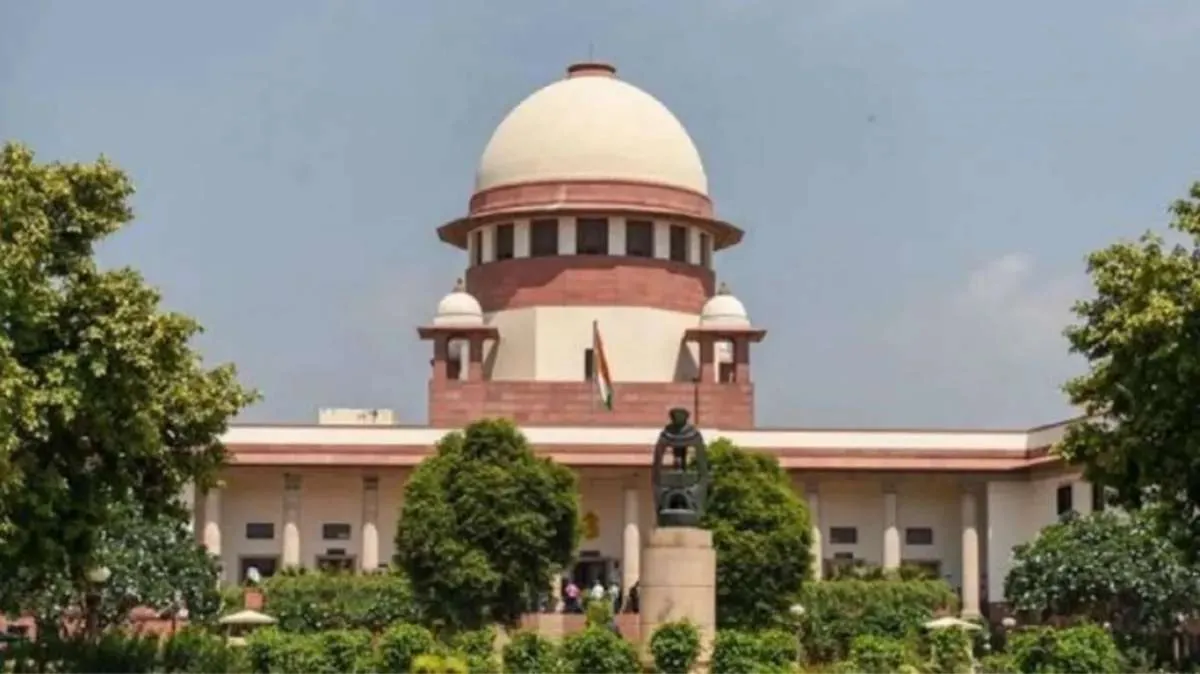
The Bar Council of India (BCI) has removed the maximum age limit for admission to law courses. This means students can now pursue legal education at any age. The BCI informed the Supreme Court about its decision during a hearing on Friday, November 6, 2026. The decision was taken through a resolution passed on November 5. The bench headed by Chief Justice of India Surya Kant took the BCI's resolution on record. The BCI's lawyer requested the court to give final effect to the decision. The Supreme Court also disposed of the petition related to the age restriction.
Earlier Age Restrictions
Before this decision, the BCI had fixed different maximum age limits for three-year and five-year law courses. Candidates seeking admission to a five-year law course could not be older than 22 years. For three-year law courses, the maximum age limit was set at 45 years. These restrictions had created concerns among people who wanted to study law later in life. With the latest resolution, the BCI has removed the upper age limit for admission to law courses.
Supreme Court Intervention
The matter reached the Supreme Court through a petition challenging the BCI's decision to impose an upper age limit. The petitioner questioned whether the BCI's power to prescribe minimum educational qualifications also allowed it to impose a maximum age limit. The Supreme Court had earlier stayed the age restrictions while hearing the matter. During the proceedings, Justice Joymalya Bagchi questioned whether the residential nature of five-year law courses could be used as a valid reason to restrict admissions based on age.
Court Asked BCI to Reconsider
During a hearing in the last week of September, the Supreme Court gave the BCI two weeks to respond to the issue. The bench asked whether the council was willing to remove the maximum age limit for admission to five-year law courses. The court wanted the BCI to reconsider its position and present its response. The issue was taken up again after the time given to the council.
BCI's Earlier Argument
The BCI had defended the age restrictions by arguing that most five-year law courses are residential programmes. According to the council, students enrolled in these courses are expected to attend classes and stay involved in campus activities. The BCI also pointed out that three-year law courses are generally non-residential. It argued that people who wanted to study law at an older age could choose the three-year course instead.
Court Rejected Residential Argument
Justice Joymalya Bagchi questioned the BCI's reasoning and pointed out that not all five-year law courses are residential. He cited the five-year law programme at Calcutta University as an example. The court said that the residential nature of a course could not be treated as a suitable basis for fixing an upper age limit. Following the proceedings, the BCI passed its November 5 resolution removing the restriction. The Supreme Court has taken the proposal on record and disposed of the petition.