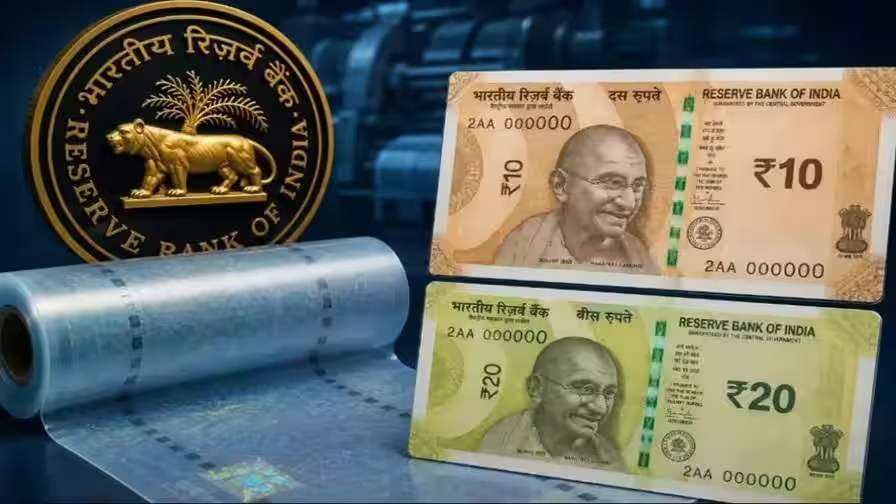
RBI Polymer Notes 2027 : The Reserve Bank of India (RBI) is preparing to introduce a new experiment involving currency notes across the country. From April 1, 2027, the central bank plans to begin field trials of Rs 10 and Rs 20 polymer, or plastic, notes. Under the plan, 100 crore notes of each denomination will be issued. However, the change will not be introduced across the entire country at once. During the initial phase, the notes will be tested on a limited scale to assess their usability and durability. Importantly, the new notes will retain the same dimensions as the existing paper currency.
No Additional Burden Expected on ATMs
The RBI has decided not to change the dimensions of the new polymer notes. This is expected to provide significant relief to banks. Changing the size of currency notes could require ATMs to be reconfigured, resulting in substantial expenses. According to a Moneycontrol report, a senior official from a public sector bank said that retaining the existing dimensions would help banks avoid this initial expenditure. Starting the trial with lower-denomination notes could also make the financial benefits of this decision significant.
How Much Stronger Are Polymer Notes?
The primary reason behind introducing polymer notes is their longer lifespan. Rs 10 and Rs 20 notes are widely used in vegetable markets, buses, auto-rickshaws and small shops. Since these notes frequently change hands, paper versions tend to tear, become dirty or get damaged by moisture. An ordinary paper currency note generally lasts around one to two years, whereas polymer notes can last three to four times longer. They are also more resistant to water and dirt.
Major Savings Expected in Currency Printing Costs
In August, RBI Governor Sanjay Malhotra highlighted the long lifespan of polymer notes and stated that such notes have remained in circulation for more than 30 years in some countries. If the experiment proves successful in India, the central bank may need to replace damaged notes and print new ones less frequently. This could help reduce long-term expenses related to currency printing and maintenance. For now, this is only a trial, and existing paper notes will remain valid as before.
Viral Claims About Rs 1,000 Notes Are Fake
Meanwhile, images and claims about the issuance of new Rs 1,000 polymer notes have also gone viral on social media. However, PIB Fact Check has declared these claims false. The RBI has also clarified that there is currently no proposal to introduce polymer notes of higher denominations. People should rely only on the RBI’s official website and press releases for accurate information about new currency notes and monetary policy decisions.
RBI Plans Major Currency Note Experiment, How Rs 10 and Rs 20 Notes Could Change from April 1
TheFearless
31 Oct 2026 · 3:08 PM IST
Related Stories