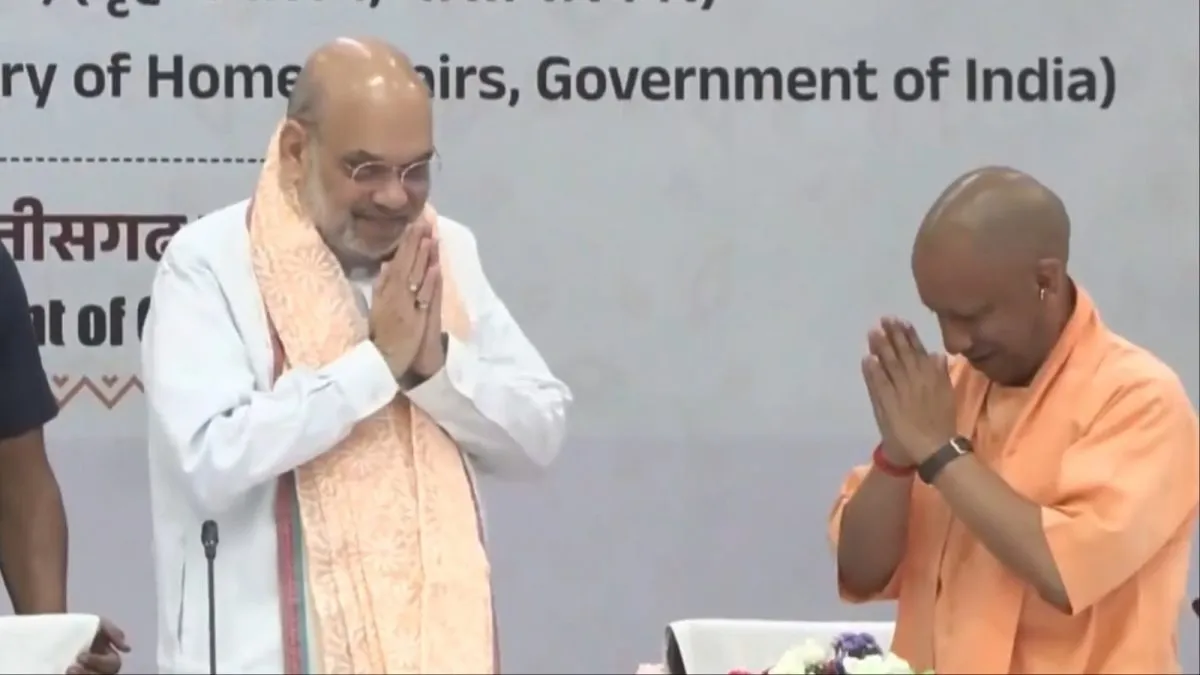
Union Home Minister Amit Shah’s Lucknow visit sent a strong message to the BJP organisation ahead of the 2027 Uttar Pradesh Assembly elections. One of his biggest concerns was internal factionalism and differences among party leaders and workers. Addressing the state executive committee meeting, Shah asked everyone to put aside their differences and focus on the election. He even told party workers to immerse their disputes in the Gomti River. His remarks came amid questions over coordination within the state unit following the Lok Sabha and recent MLC election results. The message was clear: personal ambitions must take a back seat and the organisation must come first.
Ram Temple and Hindutva Back at the Centre
Shah also used his speech to highlight the Ram Temple movement and the BJP's Hindutva agenda. Referring to October 30, 1990, he recalled the firing on Ram devotees in Ayodhya and questioned the political claims of those responsible for the incident. He credited the BJP with the construction of the Ram Temple and referred to former Chief Minister Kalyan Singh's role during the movement. Shah also mentioned the Uniform Civil Code (UCC), saying that if the BJP forms the government for a third consecutive term in Uttar Pradesh, it will implement it. This indicates that the party plans to highlight the Ram Temple and Hindutva alongside development and law-and-order issues.
Strong Message on Coordination Between Delhi and Lucknow
Shah's visit also addressed questions about coordination between the BJP's central leadership and its Uttar Pradesh unit. He made it clear that the central leadership would remain actively involved in the 2027 election campaign. Shah told workers that he would visit the state repeatedly and review their performance. BJP's Uttar Pradesh in-charge Vinod Tawde also said that the Assembly election would be fought under Shah's guidance. When asked about Yogi Adityanath's leadership, Tawde pointed to Shah's repeated praise of the Chief Minister, signalling support for the existing leadership arrangement.
Shah Recalled His Old Election Strategy
The Home Minister reminded party leaders of the BJP's earlier electoral journey in Uttar Pradesh. He recalled that the party had only 44 MLAs in the state in 2014 and that workers were disappointed at the time. Shah said he travelled down to the tehsil level to strengthen the organisation. He claimed that the BJP subsequently won 73 Lok Sabha seats in Uttar Pradesh in 2014 with around 41% of the vote. Referring to the 2017 Assembly elections, he said the party won 312 seats with nearly 40% of the vote despite the impact of demonetisation. Through these examples, he stressed the importance of strengthening the organisation from the booth level upwards.
Boosting Workers’ Confidence for a Third Term
Shah also tried to raise the morale of BJP workers after the party's reduced Lok Sabha tally in Uttar Pradesh and the Samajwadi Party's performance in recent MLC elections. He described the BJP as a strong force in the state and urged workers to focus like Arjuna on a single target: winning a third consecutive term. Taking aim at Rahul Gandhi and Akhilesh Yadav, he said the BJP would respond to their statements in the 2027 elections. His promise to visit Uttar Pradesh repeatedly and review preparations was also meant to reassure workers that the central leadership would remain involved in the campaign.