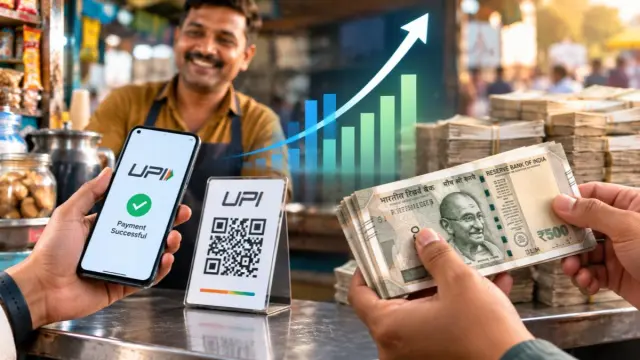
Cash Demand UPI Growth : Nearly a decade after demonetisation, India's payment system has undergone a major transformation. In 2016, the sudden shortage of currency forced people and businesses to adopt digital payment methods. Today, UPI has become an essential part of everyday transactions. However, the need for cash has not disappeared. Figures show that the amount of cash in circulation has nearly doubled over the past ten years, while transactions through UPI have increased approximately 13,600 times. This transformation highlights how digital payments and cash continue to coexist in India's economy.
Cash Circulation Continued Growing After Demonetisation
During demonetisation in November 2016, approximately 86.9% of the currency in circulation was declared invalid. This created a severe cash shortage in the market, forcing everyone from ordinary consumers to business owners to rely on digital payment methods. However, despite the growing use of online payments, demand for cash continued. The near-doubling of currency in circulation over the past decade clearly shows that physical cash still plays an important role in the Indian economy.
UPI Sets A Major Record In Ten Years
Launched in April 2016, UPI has now become India's leading digital payment method. Initially, the volume of transactions through the platform was quite limited. During the financial year 2016-17, approximately 1.78 crore UPI transactions were recorded. By the financial year 2025-26, this figure had increased to 241.62 billion. This represents an increase of nearly 13,600 times in approximately ten years. In April 2016, only 21 banks were connected to UPI, while their number had increased to 756 by September 2026.
Other Digital Payment Methods Also Expand
The expansion of online payments in India has not been limited to UPI. The use of NEFT, IMPS, debit and credit cards, prepaid payment instruments and Aadhaar-based payments has also increased. The total value of transactions through these digital payment methods stood at Rs 457.44 lakh crore in the financial year 2021-22. It rose to Rs 849.12 lakh crore in 2024-25. This indicates that digital payments have become an important part of the country's economic activities.
Why Cash Still Matters In Digital Era
Despite the growing convenience of online payments, people continue to prefer keeping some cash with them. One major reason is the availability of money for immediate use and savings during emergencies. Many households use UPI for everyday shopping and paying electricity and water bills, but still keep cash at home for unexpected situations. Moreover, limited internet connectivity and digital payment facilities in several parts of the country continue to make physical currency necessary.
Payment Habits Change, But Cash Does Not Disappear
Over the past ten years, India has made significant progress in digital payments. QR-code payments have become common at shops, markets and small businesses. As a result, many everyday cash transactions have shifted to digital platforms. However, this does not mean that demand for cash will disappear. Current trends indicate that Indian consumers are using both UPI for convenience and cash for security and immediate needs.
Cash Demand Remains Strong Even 10 Years After Demonetisation, UPI Sets New Record
TheFearless
6 Nov 2026 · 7:16 PM IST
Related Stories