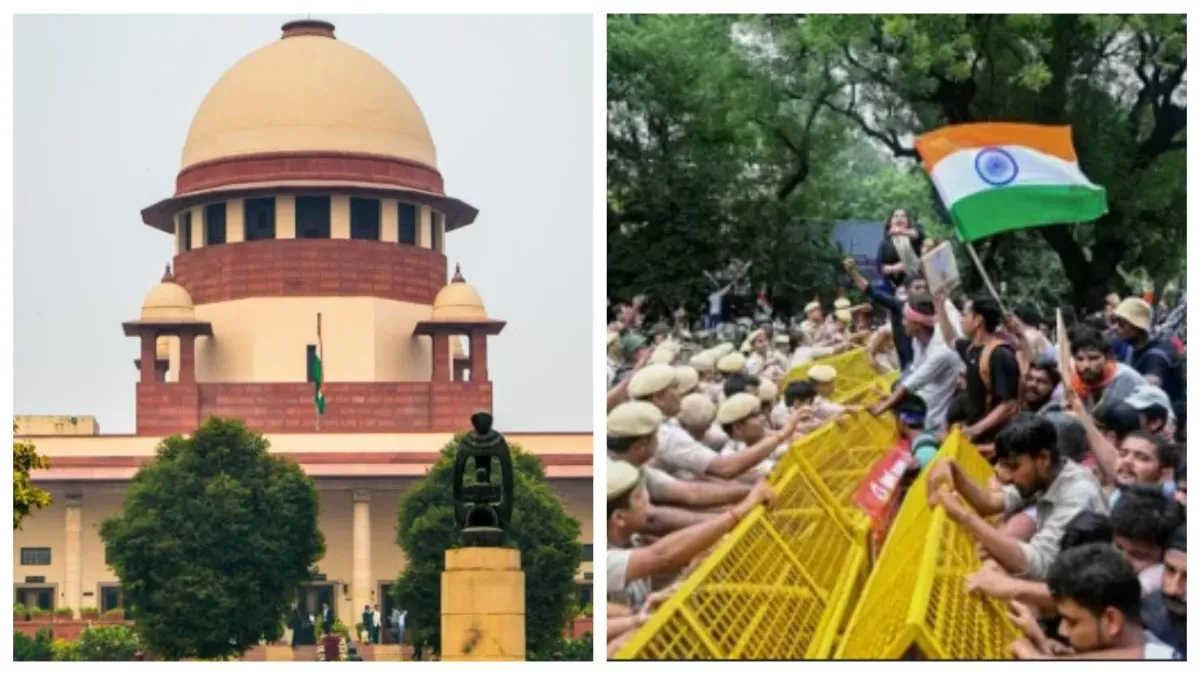
The Supreme Court has directed a high-level committee investigating allegations of police action against protesting students at Delhi's Jantar Mantar to submit its findings within one month. The court expressed concern that the panel's earlier report, submitted on October 31, was only a status update and did not contain conclusions regarding allegations of police excesses. Meanwhile, two co-convenors of the Cockroach Janata Party (CJP), Saurav Das and Ashutosh Ranka, appeared before the Delhi Police Crime Branch on Thursday for questioning in connection with the October protests. The developments have brought renewed attention to the student demonstrations, the police response and the legal proceedings surrounding the protests.
Supreme Court Directs Committee to Complete Investigation Within a Month
During Thursday's hearing, the Supreme Court made it clear that the investigation into allegations of police misconduct could not remain pending indefinitely. The bench noted that the committee's October 31 submission only described the progress made so far and did not provide any final findings. The panel has now been directed to examine all available documents and evidence and seek responses from the concerned authorities. The court also clarified that the investigation should not be restricted to complaints formally submitted by the affected students. Complaints, videos and other evidence provided by lawyers and other individuals on behalf of the alleged victims must also be considered.
CJP Leaders Questioned by Delhi Police Crime Branch
In a parallel development, CJP co-convenors Saurav Das and Ashutosh Ranka appeared at the Delhi Police Crime Branch office in Rajouri Garden on Thursday. They were summoned for questioning in connection with the protests held at Jantar Mantar in October. The investigation reportedly includes allegations of trespassing and other incidents linked to the demonstrations. Jantar Mantar has since been removed from the list of officially designated protest locations. Police officials are examining the circumstances surrounding the demonstrations and the allegations connected with the incident. The questioning of the two party leaders marks another development in the ongoing police investigation.
Lawyer Explains What Happened During Supreme Court Hearing
Advocate Shailendra Mani Tripathi, who is associated with the matter before the Supreme Court, said the high-powered committee had submitted a report in a sealed envelope a day or two before the hearing. Since the document was submitted directly to the court, it was not shared with the lawyers representing the concerned parties. He explained that the lawyers could not independently confirm the contents of the report. However, the court made certain observations and read out portions of the document during the proceedings. According to the advocate, the court indicated that complaints, evidence and other relevant information would be made available to the committee through the appointed amicus curiae and nodal officers for further examination.
Further Recommendations Expected After Examination of Evidence
The Supreme Court's directions are expected to help the committee move beyond its preliminary assessment and examine the allegations in greater detail. The panel will consider material submitted by different individuals and representatives before preparing its findings and recommendations. The court's emphasis on examining all available evidence indicates that the investigation will not be limited to complaints filed directly by students. Meanwhile, the Crime Branch inquiry involving the CJP leaders is proceeding separately. Both developments have kept the October Jantar Mantar protests in focus, with attention now centred on the committee's findings and the outcome of the ongoing police investigation.
CJP Leaders Appear Before Delhi Crime Branch as Supreme Court Seeks Report on Police Action Against Students
TheFearless
5 Nov 2026 · 11:05 PM IST
Related Stories