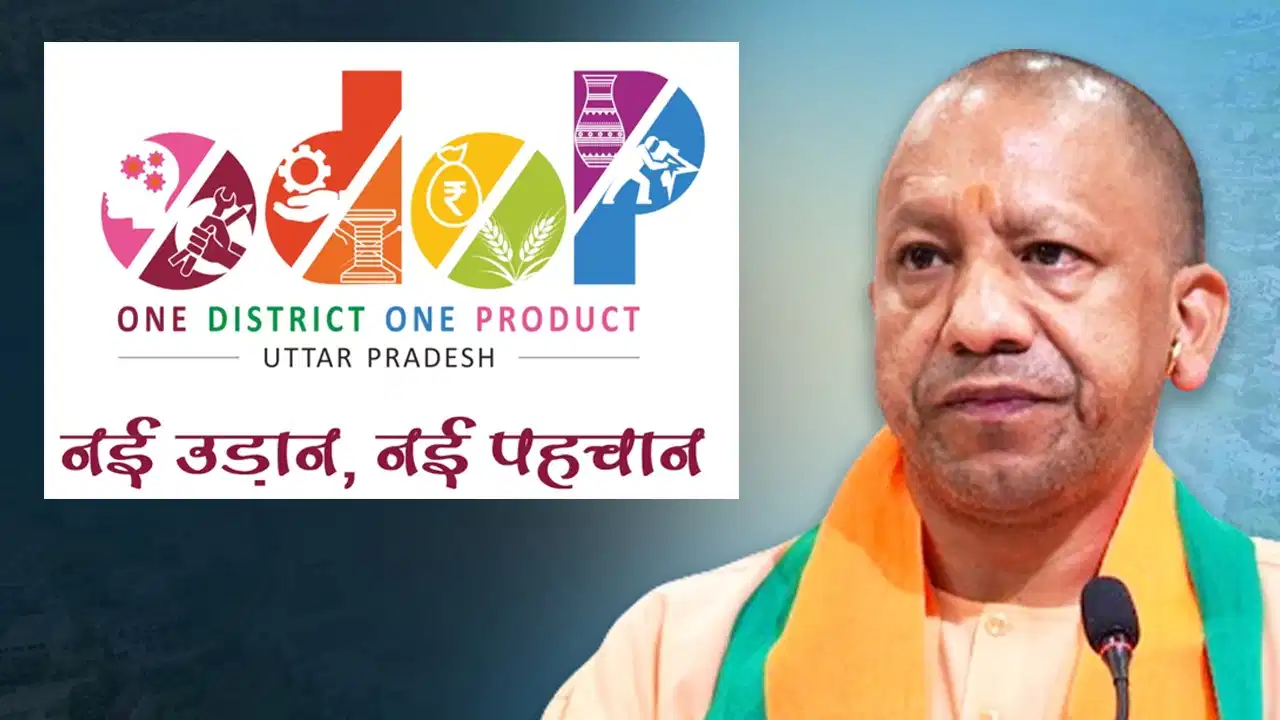
Uttar Pradesh has a rich tradition of handicrafts, with each region known for its distinctive products. Banarasi silk sarees, Moradabad's brassware, Bhadohi's carpets, Kannauj's perfumes, Firozabad's glass bangles and Saharanpur's wooden handicrafts are not just symbols of cultural heritage but also a source of livelihood for thousands of families. However, changing market trends and growing competition have raised an important question: Can traditional craftsmanship still provide enough income for artisans to support their families? To address this challenge, the Uttar Pradesh government launched the One District, One Product (ODOP) scheme in 2018. The initiative aims to identify the speciality of every district, promote local products, expand market access and create employment opportunities. Under Chief Minister Yogi Adityanath's leadership, the programme has also been linked to the state's economic development and export potential.
ODOP Scheme: Taking Local Products to Bigger Markets
One of the major objectives of ODOP is to take traditional products beyond local markets and introduce them to national and international buyers. The government has focused on branding, attractive packaging, skill development, financial assistance and participation in exhibitions to help artisans and small entrepreneurs expand their businesses. The initiative seeks to make traditional industries more competitive while creating better opportunities for local producers. However, the real impact of these efforts needs to be examined by looking at the income earned by the artisans who actually manufacture these products.
What Do the Government Figures Reveal?
According to the Uttar Pradesh MSME 1-Connect portal, between the financial years 2018-19 and 2024-25, a total of 1,33,472 beneficiaries completed training under the ODOP Training and Toolkit Scheme, while 1,28,672 toolkits were distributed. During the same period, 17,985 beneficiaries received financial assistance under the ODOP Margin Money Scheme. The portal also recorded the creation of 2,74,681 employment opportunities. Uttar Pradesh has also made significant progress in exports. According to a government response in the Rajya Sabha on December 12, 2025, the state's total recorded exports stood at Rs 1,86,060 crore in 2024-25. ODOP products were estimated to contribute approximately 45-50 per cent of this figure. However, the government clarified that exact export figures for individual ODOP products could not be separately calculated because several products do not have dedicated HSN codes.
Higher Product Sales Do Not Always Mean Higher Artisan Income
Despite the encouraging figures, the financial condition of individual artisans remains an important concern. An increase in product sales or exports does not automatically translate into higher earnings for the people making them. The final price of a handmade carpet or brass product includes raw materials, labour, design, transportation, packaging, marketing and the profit margins of traders. As a result, artisans often receive only a limited share of the final selling price. Another challenge is the irregular nature of orders. Demand may increase during festivals, wedding seasons and special occasions, while work can decline during other months. This uncertainty makes it difficult for artisan families to manage regular expenses such as education, healthcare, housing and other household needs.
Machine-Made Products and Changing Consumer Preferences
Traditional artisans are also facing growing competition from cheaper machine-made products. Machines can manufacture goods in large quantities within a short time, whereas handmade products require considerable effort and working hours. Consumer preferences are changing as well, with modern designs, attractive packaging and online availability becoming important factors in purchasing decisions. To remain competitive, traditional industries need to combine their original craftsmanship with modern technology, improved designs and changing market requirements. Schemes such as Vishwakarma Shram Samman Yojana are also aimed at supporting traditional workers through skill development and livelihood opportunities.
What Needs to Change to Improve Artisans' Earnings?
For ODOP to deliver lasting benefits, artisans must receive a fair share of the value generated by their products. Connecting them directly with buyers, expanding their participation in e-commerce platforms, reducing raw material costs and ensuring fair prices can make a significant difference. Regular orders, access to affordable credit, social security and market-oriented design training are equally important. The success of government schemes should not be measured only through the number of training sessions conducted or toolkits distributed. Their real impact should be assessed through improvements in the monthly income and financial stability of artisan households.
Traditional craftsmanship can certainly support families, but artistic skill alone is not enough. Artisans also need consistent demand, fair payment and access to wider markets. ODOP has helped give Uttar Pradesh's local products greater recognition, but its biggest test lies ahead: ensuring that the benefits of expanding markets reach the people whose hands keep these traditional crafts alive. Ultimately, the true success of a traditional art form should be measured not just by export figures or market value, but by the economic well-being of the families who preserve it.
Can Traditional Crafts Provide a Stable Income? The Ground Reality of UP's Artisans and the ODOP Scheme
TheFearless
5 Nov 2026 · 4:13 PM IST
Related Stories