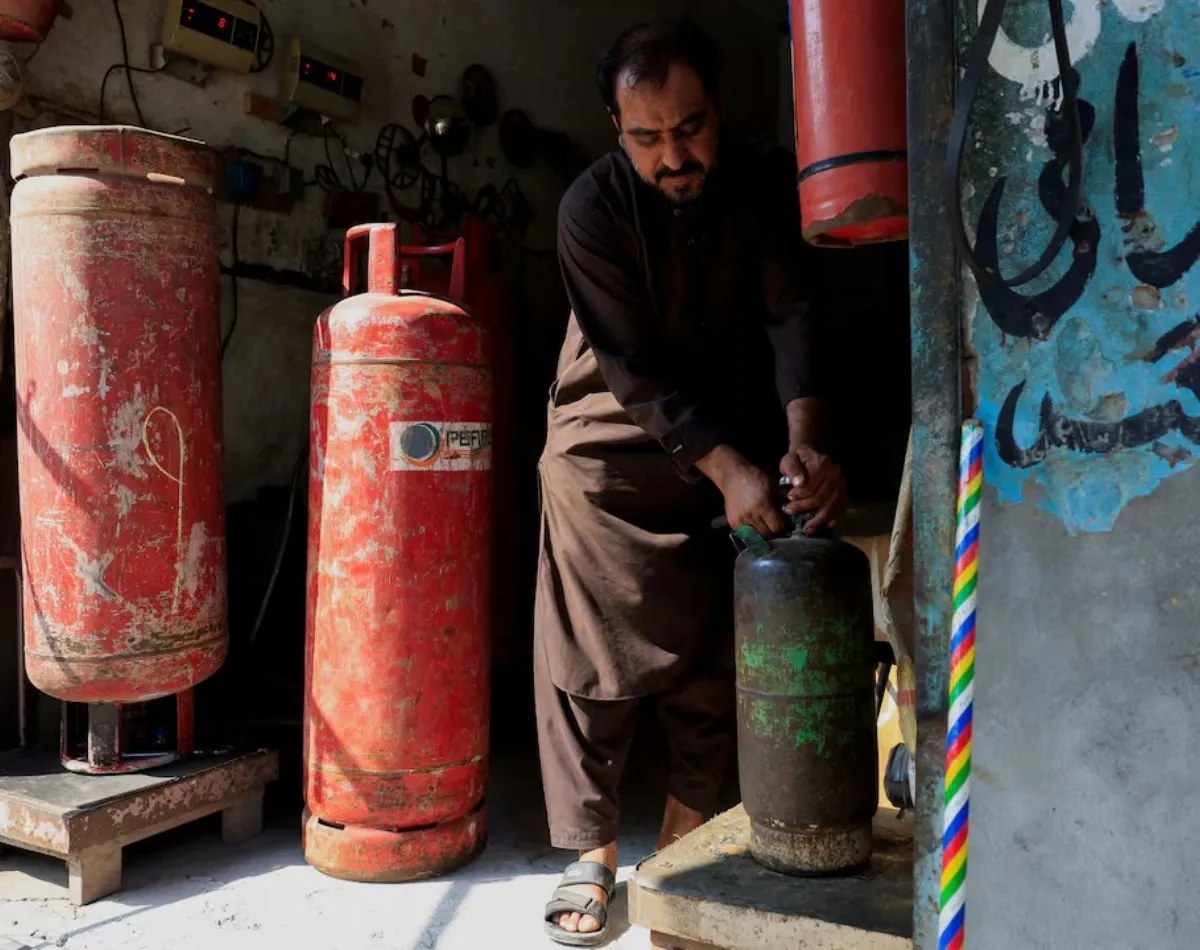
Pakistan is facing a fresh LPG crisis as gas supplies from Iran have come to a halt following the closure of two border crossings. The shortage has pushed LPG prices sharply higher, creating serious problems for ordinary people and especially rickshaw drivers. Lahore has been among the worst-affected cities, as a large number of three-wheeler rickshaws run on LPG. According to the Pakistan LPG Association, around 7,000 metric tonnes of LPG used to enter the country from Iran every day. With this supply disrupted, traders are struggling to meet demand and consumers are facing rising fuel costs. The crisis has added to the economic difficulties already facing Pakistan.
Cylinder Prices Jump 56%
Pakistani traders say LPG prices have been rising continuously since October 17, when two border crossings with Iran were closed. The disruption has stopped LPG imports and pushed cylinder prices to new highs. Within a few days, the price of a 12-kg LPG cylinder increased by 56 per cent to around 7,000 Pakistani rupees. In the open market, LPG is selling for nearly 583 Pakistani rupees per kilogram. Traders have described the situation as a major energy shock, adding to the pressure on households and businesses already struggling with high living costs.
Rickshaw Drivers Cut Their Meals
The LPG shortage has hit thousands of rickshaw drivers in Lahore. Rashid Ali, a 33-year-old driver who has been working in the city for 13 years, says his financial condition has become extremely difficult. He starts work at 6 am and sometimes continues until midnight. Earlier, he could earn around 6.50 dollars, or approximately 1,800 Pakistani rupees, in a day. That income was enough to meet his family's basic needs. However, rising LPG prices have reduced his daily earnings to nearly half of what he used to make. Ali says he now earns only around 3 dollars a day, forcing his family to cut down on food.
Passengers Refuse Higher Fares
Higher fuel costs have not allowed drivers to increase their earnings because passengers are unwilling to pay more. Ali says that a journey which should cost between 200 and 250 Pakistani rupees is often paid for at just 80, 100 or a maximum of 150 rupees. This leaves drivers struggling to cover their fuel expenses and household needs. The problem is not limited to drivers alone. Passengers are also finding it difficult to manage daily travel costs. With fuel becoming more expensive and earnings remaining low, both sides are facing growing financial pressure.
Thousands of Rickshaws Affected
Majid Ghauri, chairman of the Awami Rickshaw Union, describes LPG as the fuel of poor people. According to him, the union has around 43,000 auto-rickshaws, nearly 70 per cent of which run on LPG. It also has around 8,000 Qingqi three-wheelers that depend on the same fuel. The shortage has therefore affected a large number of drivers and commuters. A passenger named Mohammad Ramzan told Reuters that a driver demanded 500 Pakistani rupees for a ride across the city. When Ramzan offered half the amount, the driver refused to take him. Such incidents show how the fuel crisis is disrupting everyday travel.
Pakistan Faces Multiple Economic Pressures
The LPG shortage has emerged at a time when Pakistan is already dealing with several economic challenges. The country's inflation rate rose to 9.6 per cent in October. Last week, the central bank increased interest rates to 12 per cent, citing rising energy and wheat prices. Meanwhile, petrol and high-speed diesel prices have already increased by around 40 per cent amid the US-Iran war. The latest LPG crisis has added another burden on ordinary families and small transport operators. For thousands of rickshaw drivers in Lahore, rising fuel prices now mean lower earnings and less food for their families.