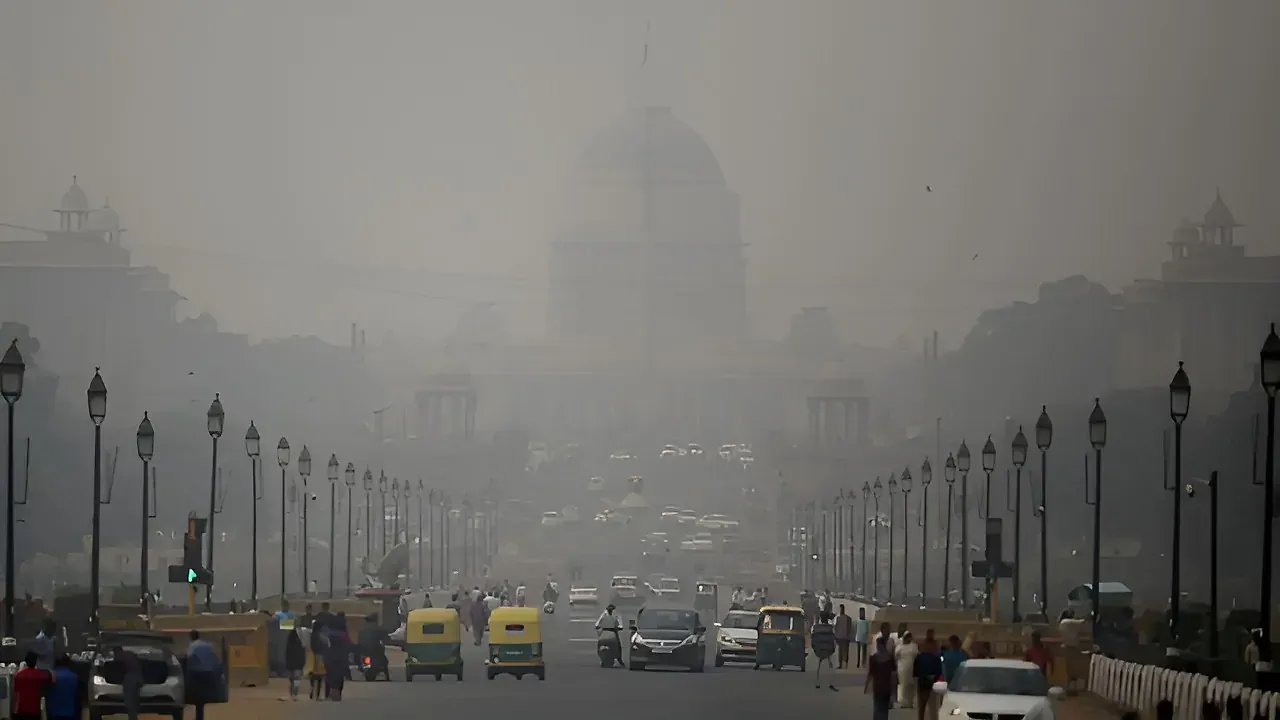
Delhi witnessed a temporary improvement in air quality on Sunday morning following overnight rainfall across the National Capital Region. The city’s Air Quality Index (AQI) was recorded at 175 between 7 am and 8 am, placing it in the moderate category, according to the figures provided. However, forecasts indicated that the AQI could rise to around 317, potentially pushing the capital back into the very poor category. The improvement has offered some relief to residents amid growing concerns over pollution as winter approaches.
October 24 Records Lowest AQI in a Decade
Delhi recorded an AQI of 191 on October 24, marking its lowest reading for that date in the past decade, excluding the Covid-19 period, according to the Delhi government. The Environment Department stated that the AQI on October 24 stood at 306 in 2024 and 275 in 2025 before falling to 191 in 2026. Delhi Environment Minister Manjinder Singh Sirsa attributed the improvement to pollution-control measures, enforcement and public participation. An AQI of 191 falls within the moderate category under the Central Pollution Control Board’s classification.
Anti-Pollution Measures Intensified Across Delhi
The Delhi government said enforcement activities had been stepped up to control pollution from vehicles, road dust and construction waste. According to its statement, authorities issued 9,883 vehicle challans in 24 hours. Mechanical sweeping covered 2,810 kilometres of roads, while water sprinkling was carried out across another 1,075 kilometres. Officials also reported removing 12,702 metric tonnes of waste and collecting 2,223 metric tonnes of construction and demolition waste. Inspections were conducted at 160 construction sites or plots, and 168 metric tonnes of road dust were collected. The government said monitoring and enforcement would continue as part of its campaign to improve air quality.
AQI Categories and What Lies Ahead
Under CPCB standards, an AQI of 101–200 is moderate, 201–300 is poor, and 301–400 is very poor. Although rainfall can temporarily help reduce airborne pollution, the latest improvement may not last if pollution levels rise again. Authorities are continuing efforts to address emissions and dust, while the coming days will be important in determining whether Delhi can sustain the recent improvement in air quality.
Delhi Air Quality Improves After Overnight Rain, AQI Hits October’s Best Level in a Decade
TheFearless
25 Oct 2026 · 2:29 PM IST

Related Stories