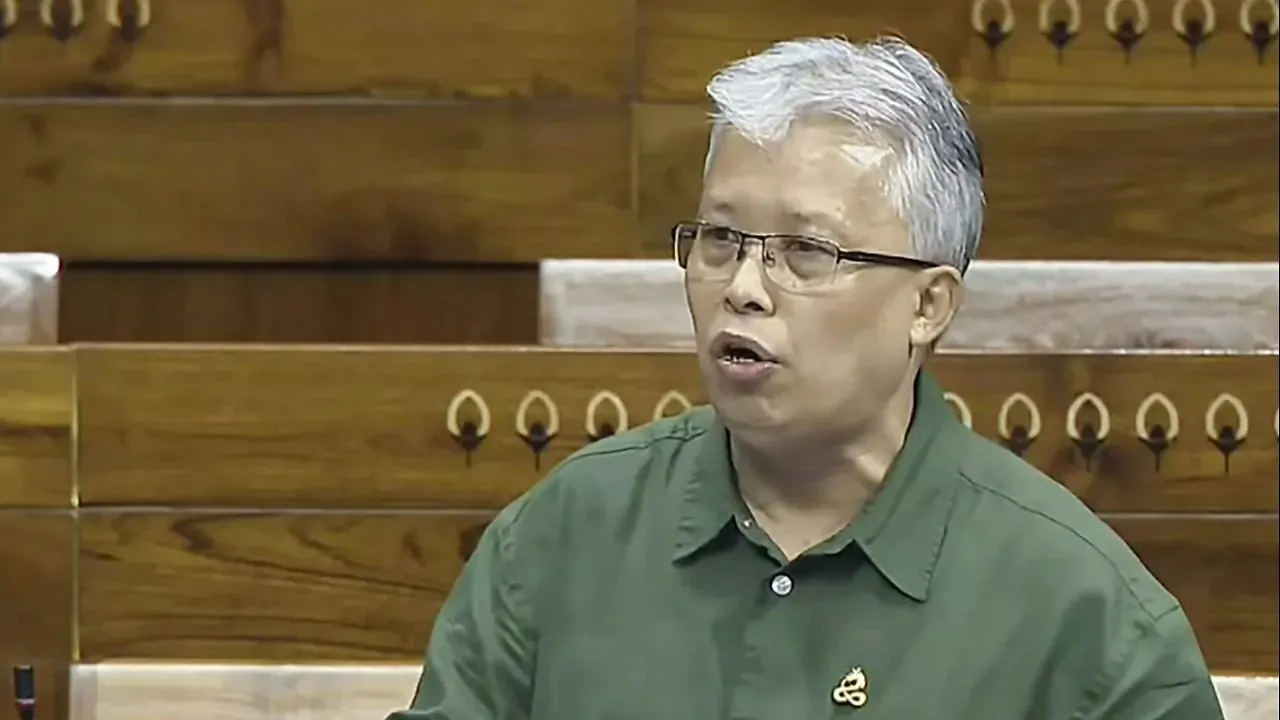
Delhi Police have registered a First Information Report (FIR) against Congress MP and former Jawaharlal Nehru University (JNU) professor Angomcha Bimol Akoijam following a complaint filed by the university’s Chief Security Officer. The case adds a new dimension to the controversy surrounding Akoijam, who was dismissed from his teaching position after an internal inquiry into sexual harassment allegations that he has denied. According to Delhi Police, the FIR was registered at Vasant Kunj North police station on October 11 under Sections 75, 75(1)(i), 75(1)(iv) and 79 of the Bharatiya Nyaya Sanhita (BNS). Police said the investigation is ongoing. Meanwhile, the Bharatiya Janata Party (BJP) has intensified its protests over the allegations, while Akoijam has accused JNU Vice-Chancellor Santishree D Pandit of making false claims and pursuing what he describes as a politically motivated campaign against him.
Akoijam Disputes University’s Claims About Inquiry
In a detailed statement published on X, Akoijam challenged the university administration’s account of the disciplinary proceedings and rejected allegations that he had failed to cooperate with the inquiry or present witnesses. He said he submitted a written response to the allegations on May 31, 2026, and appeared for his deposition on July 16. The Congress MP also claimed that he had responded to all 43 emails sent by the Vice-Chancellor, disputing her assertion that approximately 300 emails had been sent to him. According to Akoijam, witnesses supporting his position recorded their depositions on August 14, contradicting the administration’s claim that he had not presented any witnesses. He further questioned the varying numbers of complainants mentioned during the controversy, claiming the figures cited had ranged from two to 16. He also rejected the BJP’s use of the phrase “sex for grades”, arguing that the expression did not appear in the complaint he described as politically motivated.
JNU Dismisses MP Following Sexual Harassment Inquiry
JNU dismissed Akoijam from service on October 9 after an inquiry by the university’s Internal Committee into sexual harassment complaints. Media reports have stated that 11 women students had filed complaints against him. The university’s dismissal order reportedly referred to the committee’s findings and the applicable service rules. Akoijam has strongly criticised the proceedings, describing them as a “witch hunt” and alleging that the administration allowed confidential information to be disclosed, exposing him to a damaging media trial. He has also questioned the fairness of the process, arguing that established procedures were not followed. The allegations and counterclaims have placed the university under scrutiny, with questions being raised about disciplinary procedures, the protection of complainants and the rights of the accused. The allegations against Akoijam remain disputed, and the police investigation is continuing.
JNUTA’s Response Sparks Debate Among Faculty Members
The dismissal has also triggered disagreement over the position taken by the Jawaharlal Nehru University Teachers’ Association (JNUTA). The association criticised the action as hasty and questioned whether the Vice-Chancellor had the authority to terminate Akoijam’s service without prior approval from the university’s Executive Council. However, Christhu Doss, a faculty member at JNU’s Centre for Historical Studies, criticised what he described as selective concern within the teachers’ body. He argued that defending an employee’s rights should not come at the expense of the dignity of students who file complaints or the university’s obligation to provide a safe academic environment. Doss also referred to the Vice-Chancellor’s emergency powers, stating that such action could be taken subject to the applicable reporting requirements. He said the dismissal order referred to the relevant provision and indicated that the matter would be placed before the Executive Council. The episode has intensified debate over institutional accountability, due process and the handling of sexual harassment complaints at universities.
Delhi Police Register FIR Against Congress MP Bimol Akoijam Amid JNU Sexual Harassment Controversy
TheFearless
12 Oct 2026 · 6:10 PM IST
Related Stories