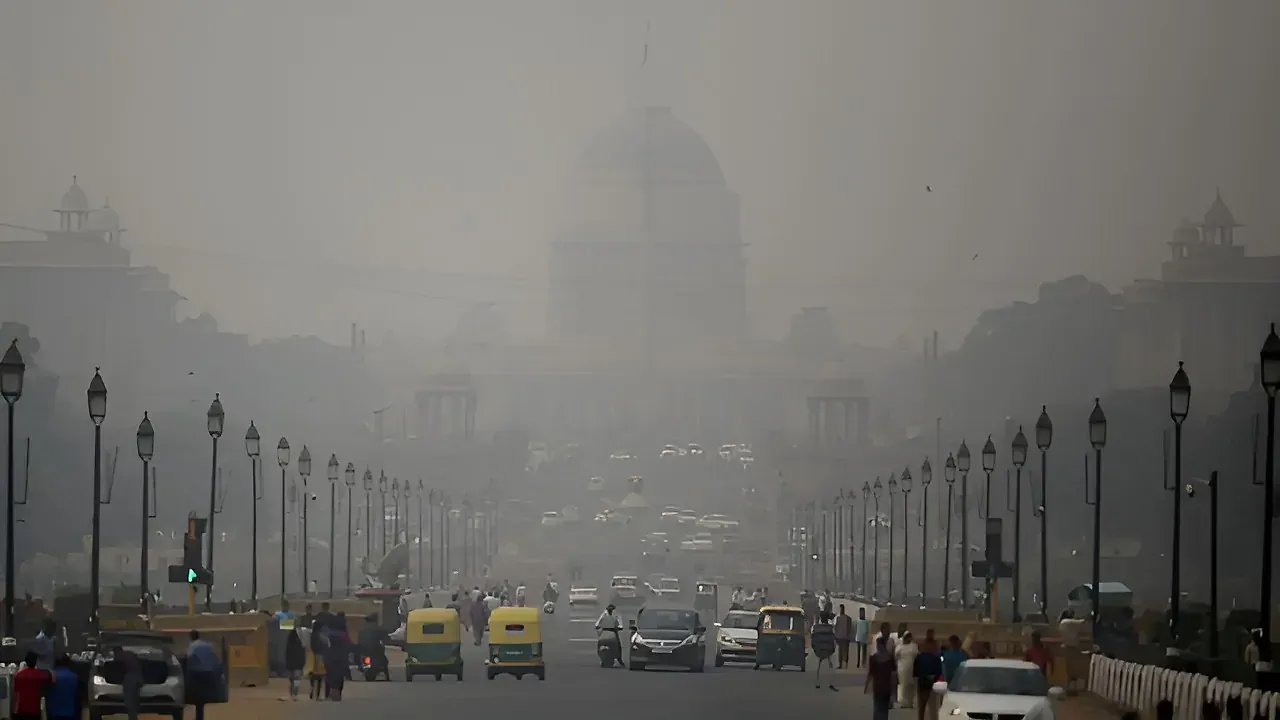
Delhi’s air quality remained in the ‘moderate’ category early Saturday morning, but pollution levels were expected to worsen during the day, potentially pushing the Air Quality Index (AQI) to 310–320 and into the ‘very poor’ category.
According to the available figures, Delhi recorded an AQI of 193 around 7 am on Saturday. The forecast warned of a possible deterioration as pollution continued to affect the national capital. On Friday, Delhi’s AQI stood at 223 at 8 am, placing it in the ‘poor’ category, according to the Central Pollution Control Board (CPCB). On Thursday morning, the AQI had been recorded at 226 at 7 am, indicating a slight improvement by Saturday morning.
Several Delhi Areas Record Poor Air Quality
CPCB data from Friday showed elevated pollution levels across several parts of the city. Jahangirpuri recorded an AQI of 284, followed by Rohini at 281 and Punjabi Bagh at 275. Bawana registered 269, Patparganj 263, Alipur 257, Chandni Chowk 245 and Aya Nagar 231.
Wazirpur recorded an AQI of 222, while Anand Vihar stood at 219. Ashok Vihar reported a comparatively lower AQI of 192, placing it in the ‘moderate’ category.
Under CPCB classifications, an AQI of 0–50 is considered ‘good’, 51–100 ‘satisfactory’, 101–200 ‘moderate’, 201–300 ‘poor’, 301–400 ‘very poor’ and 401–500 ‘severe’. If the forecast materialises, Delhi’s air quality could deteriorate significantly during the day.
GRAP Stage-I Measures Activated Across Delhi-NCR
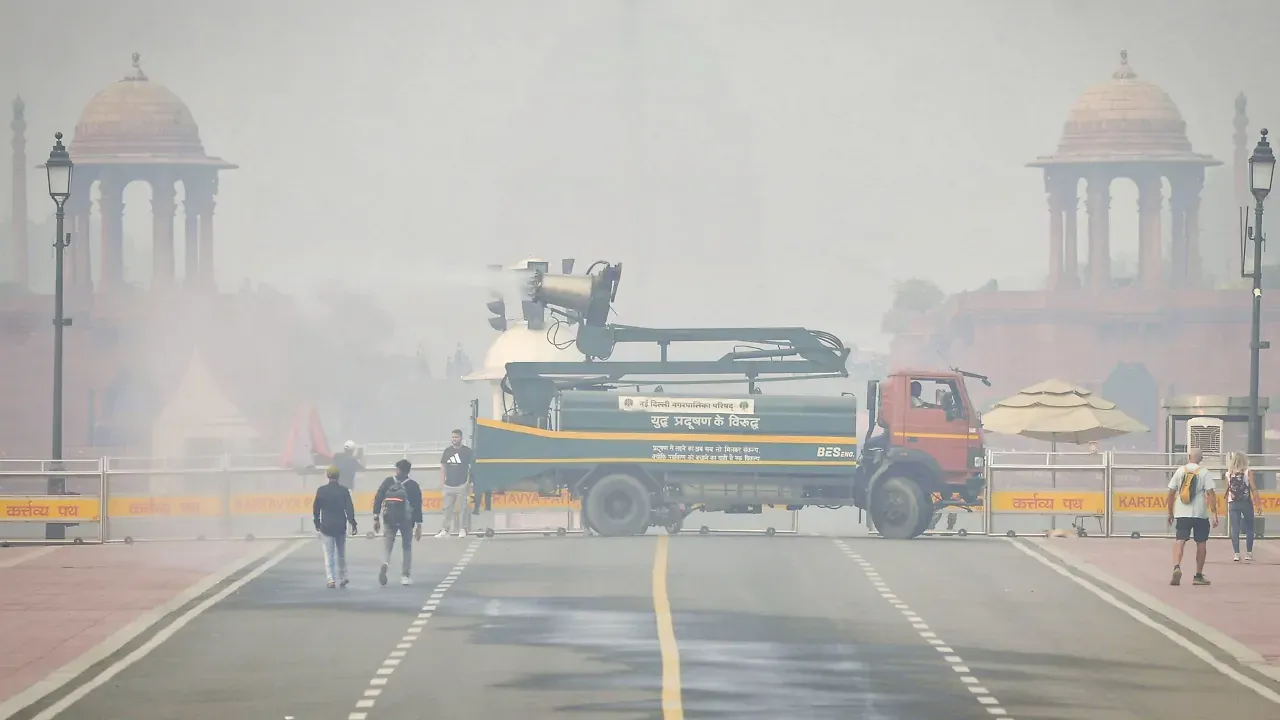
Amid concerns over worsening pollution, the Commission for Air Quality Management (CAQM) invoked Stage-I of the Graded Response Action Plan (GRAP) across Delhi-NCR on Wednesday. The decision followed a review of the regional air quality situation and the need for preventive measures to limit further deterioration.
Stage-I measures focus on strengthening enforcement and controlling pollution sources, including road dust, construction activities and vehicle emissions.
Traffic Police Review Pollution-Control Measures
The Delhi Traffic Police also held an inter-state coordination meeting to discuss the implementation of GRAP Stage-I measures. Officials reviewed plans to divert non-compliant buses at Delhi’s borders, check valid pollution-under-control certificates and enforce vehicle-entry restrictions scheduled for November 1 to January 31.
Authorities also discussed measures to control road dust and pollution from construction activities. Relevant agencies were directed to implement CAQM guidelines within the stipulated timelines and improve real-time coordination.
With pollution levels expected to rise, residents are advised to follow official air-quality updates and take appropriate precautions if conditions deteriorate.
Delhi Wakes Up to Moderate Air Quality, AQI May Rise to ‘Very Poor’ Levels
TheFearless
24 Oct 2026 · 3:49 PM IST
Related Stories