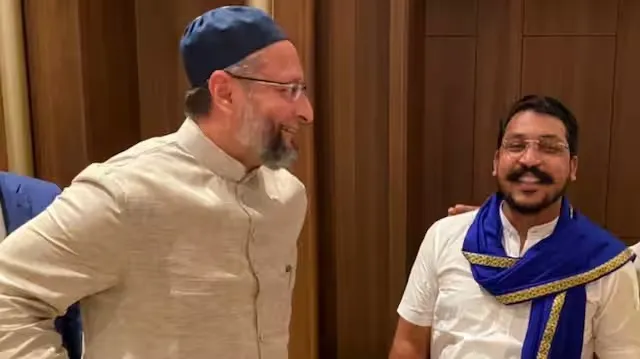
Political activity in Uttar Pradesh is gaining momentum ahead of the 2027 Assembly elections, with discussions reportedly underway about a possible alliance between Asaduddin Owaisi and MP Chandrashekhar Azad. There are indications that the All India Majlis-e-Ittehadul Muslimeen (AIMIM) and Azad Samaj Party (Kanshi Ram) may work together to form a new political front, with efforts also being made to bring smaller parties on board. However, no formal announcement of an alliance has been made so far.
Efforts Underway to Bring Smaller Parties Together
Swami Prasad Maurya’s Apni Janata Party and Apna Dal (Kamerawadi), led by Pallavi Patel, are among the parties being discussed as potential partners in the proposed front. Reports about bringing these leaders together on a common platform had also emerged in September. However, discussions about a possible alliance should not be confused with a formal agreement. The participation of these parties remains unconfirmed.
A New Political Challenge for SP and Congress
The proposed alliance could seek to bring Dalit, Muslim and backward-class voters together under a common political platform. Chandrashekhar Azad has been working to strengthen his independent political identity among Dalit voters, while Owaisi has consistently raised issues concerning Muslim political representation. The inclusion of leaders such as Swami Prasad Maurya and Pallavi Patel could potentially broaden the social base of the proposed front.
Owaisi has previously formed electoral alliances with smaller parties in Uttar Pradesh, but these efforts have not translated into significant success in terms of Assembly seats. Meanwhile, the presence of the Samajwadi Party-Congress alliance could make the division of opposition votes an important factor in the upcoming election.
Seat-Sharing and Common Strategy Will Be Crucial
The prospects of a third front will depend on more than political meetings and preliminary discussions. Agreement on seat-sharing, regional influence, common election issues and organisational strength will be essential for the alliance to take shape.
If the proposed front materialises, its impact could extend beyond the constituencies where its candidates contest. It could also influence opposition vote distribution and the electoral strategies of other parties. For now, the political picture remains uncertain, with formal announcements and confirmation from the potential alliance partners still awaited.
Efforts to Form Third Front Intensify, Chandrashekhar Azad and Owaisi May Join Hands
TheFearless
26 Oct 2026 · 11:32 PM IST
Related Stories