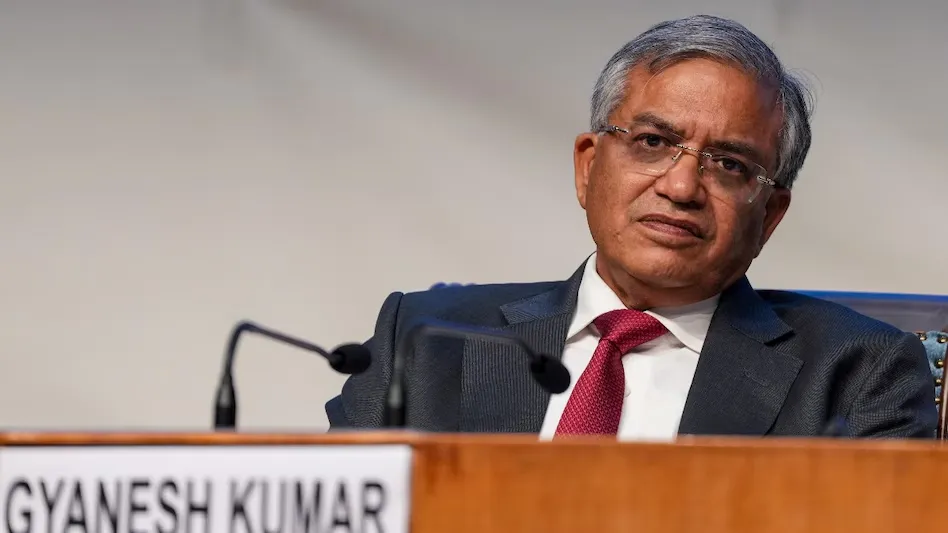
The Election Commission of India has filed an affidavit in the Supreme Court presenting its position amid questions surrounding the Special Intensive Revision (SIR) of electoral rolls. Rejecting allegations that Chief Election Commissioner Gyanesh Kumar took unilateral decisions, the Commission stated that all three orders related to the SIR were issued with the unanimous consent of its members. It also clarified allegations concerning changes to Form 6, the process of adding and deleting names from voter lists, and the demand to restrain the Chief Election Commissioner from performing his duties.
Commission Clarifies Its Three SIR Orders
According to the Election Commission, the three orders related to the SIR, issued in June 2025, October 2025 and May 2026, were approved unanimously. The affidavit stated that Chief Election Commissioner Gyanesh Kumar and both Election Commissioners had approved the decisions. The Commission clarified that comments, questions or suggestions made by any commissioner on a file cannot be treated as the Commission's final decision. Under the prescribed procedure, files are circulated among the concerned members, and approval may also be obtained electronically when necessary.
Commission Responds to the July 28 Order
The Commission also referred to an order issued on July 28, stating that it had been issued by an additional secretary serving on deputation. The following day, both Election Commissioners wrote to the Cabinet Secretary regarding the matter. According to the Commission, the order was not implemented after joint directions were issued by the two Election Commissioners on July 30. The Commission cited this sequence of events to clarify the decision-making process and the role of officials.
Allegations of Changes to Form 6 Rejected
Addressing concerns about Form 6, which is used to apply for inclusion in the electoral roll, the Commission stated that no amendments had been made to the form. According to the Commission, the authority to amend Form 6 rests with the Central Government, while the declaration used for the SIR is a separate document.
However, the Commission acknowledged that the way these documents were displayed in the online application process could have created the impression that changes had been made to the form. It said the online system had now been updated to display Form 6 and the SIR declaration separately, as they appear in the paper-based process.
Clarification on Voter Lists and the Chief Election Commissioner
The Commission stated that when an elector's previous records cannot be matched with the existing electoral roll, Booth Level Officers (BLOs) may visit their homes to collect the required documents. Hearings would be required only in specific cases, with online hearings given priority.
Regarding the ECINet system, the Commission clarified that no voter's name can be added to or deleted from the electoral roll without an order from the Electoral Registration Officer. A committee of experts from the Indian Institutes of Technology (IITs) and the Indian Institute of Science (IISc) has also been constituted to examine the process.
Opposing the demand to restrain the Chief Election Commissioner from performing his duties, the Commission said the constitutional procedure for removing the CEC is similar to the process for removing a Supreme Court judge. It further stated that it had not released any internal files or official notes to the media. Citing the Dussehra holidays, the Commission said it had filed a brief response for the time being and sought permission to submit a detailed, point-by-point reply.
Election Commission Files Affidavit in Supreme Court, Says SIR Decisions Were Taken Unanimously
TheFearless
26 Oct 2026 · 11:33 PM IST
Related Stories