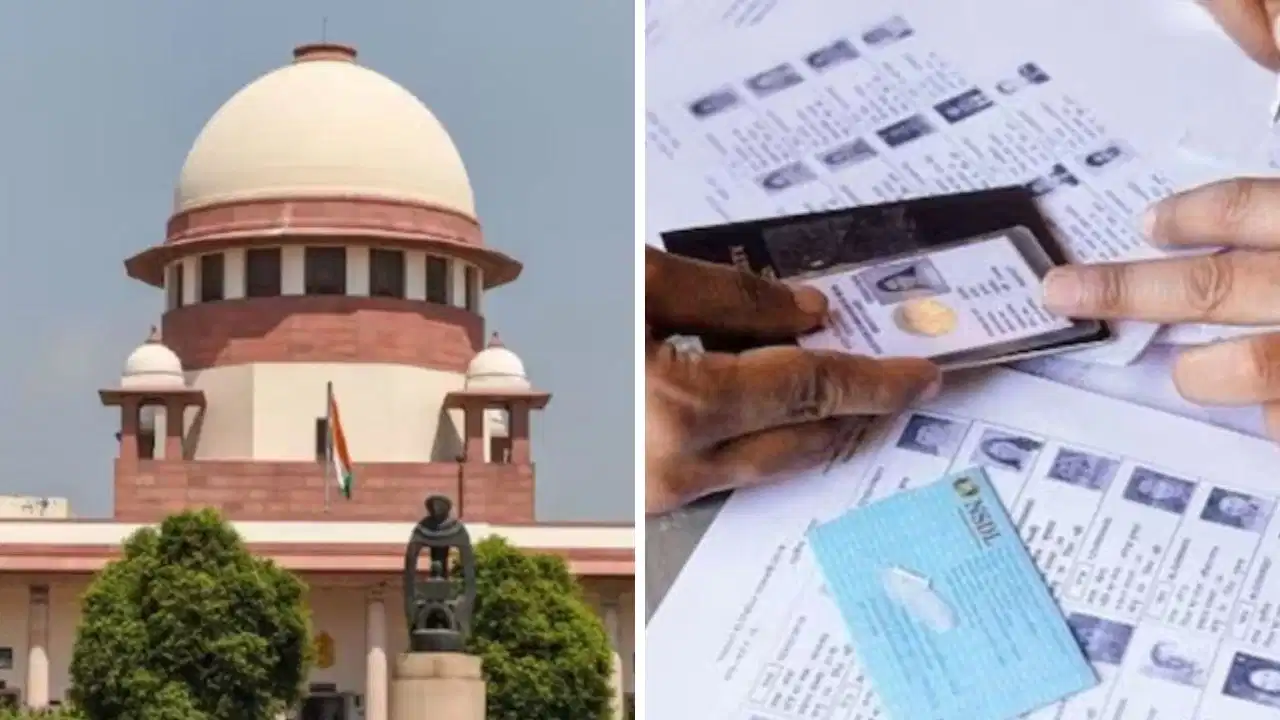
The Supreme Court has questioned the Election Commission of India (ECI) over its requirement that certain voters in Delhi fill out Form-6 during the Special Intensive Revision (SIR) of electoral rolls, despite already being registered in the 2026 voter list. Hearing a petition challenging the Delhi SIR process on Wednesday, the court asked why people who failed to submit enumeration forms were being asked to register as new voters. The bench directed the Election Commission to respond within two weeks. The issue has gained significance after approximately 43 lakh names were reportedly excluded from the draft electoral rolls under categories such as “shifted” or “absent.” The court’s observations focused on ensuring that existing voters are not unnecessarily required to register afresh when their circumstances involve only a change of residence or temporary absence.
Court Questions Why Existing Voters Must Use Form-6
The Supreme Court observed that Form-6 is intended for individuals seeking registration as new voters. It indicated that people already included in the 2026 electoral rolls who have merely moved from one place to another should be allowed to use Form-8, which is designed for changes in an existing voter’s registration details. The court said such individuals should not be required to declare that they had never previously been registered as voters. It also highlighted the distinction between temporary absence and permanent relocation, noting that a person who leaves home for one or two months for work does not necessarily become a permanent migrant. The observations raised questions about how the SIR process handles existing voters whose enumeration forms were not submitted.
Bench Raises Concern Over Missed Deadlines
Justice Joymalya Bagchi questioned whether a voter who failed to submit an enumeration form could permanently lose the opportunity to exercise their franchise. He described the issue as a structural inconsistency that required correction. The court also observed that rejecting a form solely because a deadline had passed may serve little purpose while the final electoral roll is yet to be prepared. Responding to the concerns, the Election Commission said it would consider accepting registration forms submitted after the deadline and could extend the October 30 cut-off if necessary. The court’s observations underscored the importance of providing eligible voters an opportunity to correct their records and complete the required formalities before the final list is published.
Supreme Court Clarifies Position on Logical Discrepancies
During the hearing, the bench also discussed earlier proceedings concerning SIR exercises in Bihar and West Bengal. The court clarified that it had not delivered a final ruling on the issue of “logical discrepancies” in the Bihar SIR case. It noted that a related arrangement had been permitted on an interim basis in West Bengal, but that should not be interpreted as a final judicial determination on the broader issue. Justice Bagchi observed that the Supreme Court had not formally recognised the logical-discrepancy category as a settled legal principle. The Election Commission’s response is now awaited within the two-week period set by the court. The proceedings could have implications for how voter registration, relocation and enumeration-related omissions are handled during the ongoing revision process.
Supreme Court Questions Form-6 Requirement in Delhi SIR, Seeks EC Reply Within Two Weeks
TheFearless
28 Oct 2026 · 5:52 PM IST
Related Stories