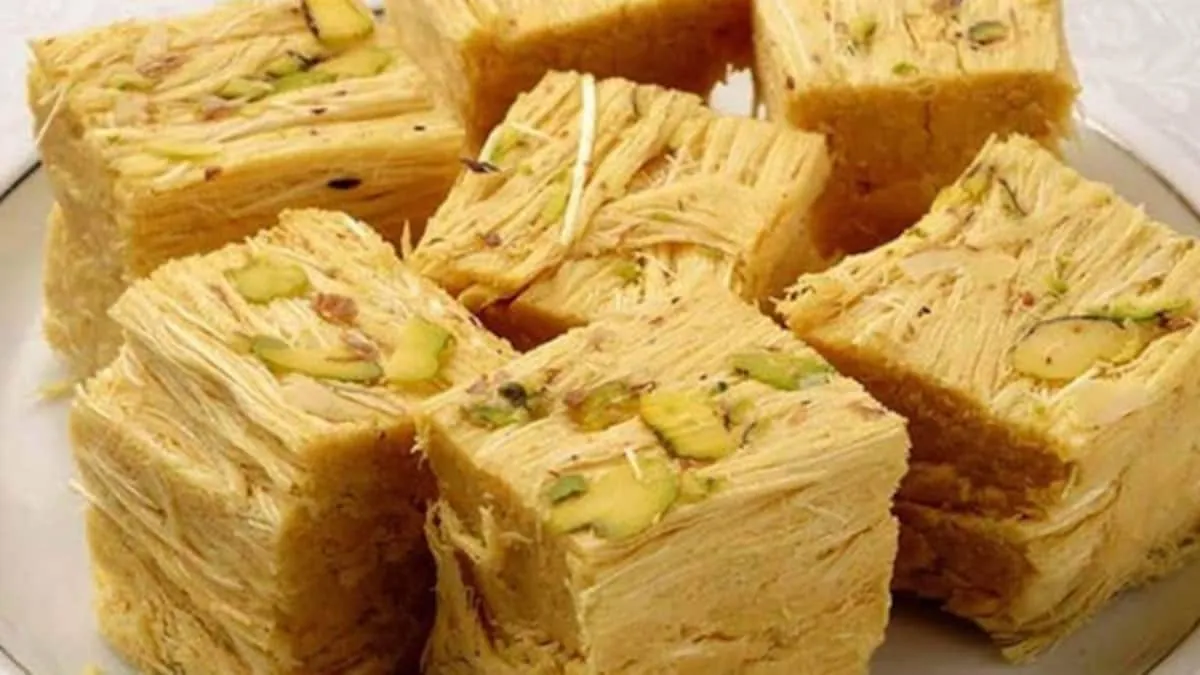
History of Soan Papdi: As soon as Diwali arives, markets flood with a variety of sweets. During this time, from hilarious memes on social media to exchanges among relatives, Soan Papdi is discussed the most. Even if people make fun of it by calling it a rotating gift, no one can deny its excellent taste and the quality of not spoiling for several months. Let us know what the journey and history of India’s most popular sweets.
Where did Soan Papdi come from
There is no solid written record documents regarding the origins of Soan Papdi, but it is often associated with Rajasthan and Maharashtra. Culinary experts compare it to Turkish famous traditional sweet, Pişmaniye. That too is fibrous and flaky just like this. The only difference is that roasted flour is used in it instead of gram flour.
In India, artisans in the western cities of Maharashtra first made it using a combination of gram flour (besan) and sugar syrup. Gradually, it spread to Gujarat, Punjab, and Rajasthan, and today it is popular across the entire country, including all of North India.
Why is it so long-lasting
Sweets made from mawa (khoya) use milk, which causes them to spoil quickly. But milk is not used at all in makong Soan Papdi. It is mainlt made from gram flour, refined wheat flour (maida), desi ghee, and sugar. For this very reason, it stays fresh for at least 6 months and big brands are easily able to supply it to far flung areas.
Why is it gifted the most on Diwali
Compared to expensive sweets like Kaju Katli or those made from mawa sweets, Son Papdi is quite Cheap. Being budget-friendly, it becomes a top choice for corporate gifting and for exchanges among relatives.
Different names and special taste
In different parts of the country, it is known as Sohan Papdi, Shon Papdi, San Papdi, and Shom Papdi. To make it even more delicious, ingredients like cardamom, pistachios, almonds, and melon seeds are added, which give it a distinct crispness and flavor.
In demand all 12 months
This is not just a Diwali sweet. According to experts just like motichoor ladoos and kaju katli, son papdi is available everywhere, all year round. Whether at a railway station, an airport, or a local neighborhood shop, it can be easily found just about anywhere.