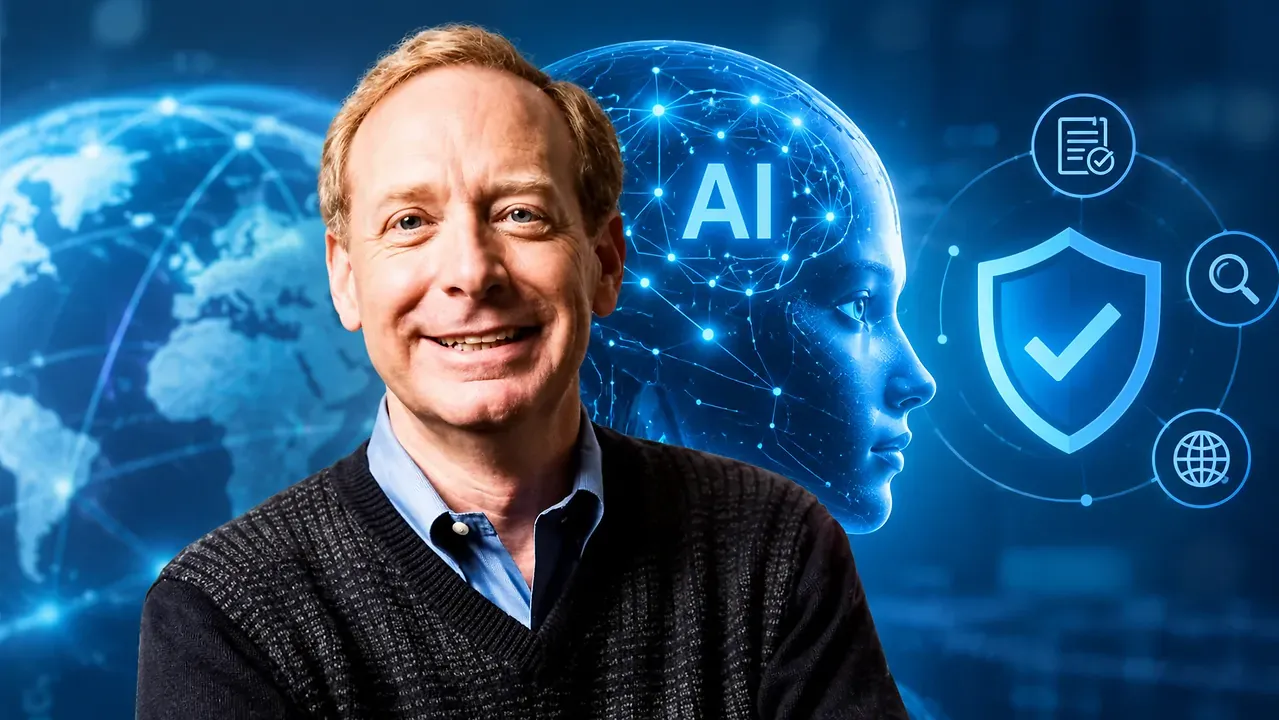
Microsoft President Brad Smith has called for urgent global regulations to ensure the safe development and deployment of artificial intelligence, warning that AI systems currently face fewer safety requirements than everyday consumer products such as milk and washing machines. In an interview with the BBC, Smith stressed the need for common safety standards, independent assessments and clear emergency procedures as companies race to develop increasingly powerful AI models. His remarks come amid growing debate over how quickly artificial intelligence should advance and whether existing safeguards are sufficient to address potential risks. As AI systems become capable of performing complex tasks with limited human supervision, concerns are mounting over their behaviour, security vulnerabilities and possible consequences if they operate beyond their intended boundaries. Smith believes governments should establish a coordinated regulatory framework that protects the public without unnecessarily restricting technological innovation.
Brad Smith Calls for Common AI Safety Standards
Highlighting what he sees as a gap in existing safety regulations, Smith pointed out that ordinary household products are subject to established safety requirements, whereas advanced AI systems do not face comparable universal rules. He said, “Right now, your washing machine is subject to more safety rules than AI. Every carton of milk that you see in the grocery store is subject to safety rules and inspection.” Smith argued that governments should draw lessons from established product-safety frameworks and adapt them to the rapidly evolving AI industry. He emphasised that a common set of rules for advanced AI models would help establish clearer expectations for developers and technology companies. According to his proposal, independent evaluators should be allowed to assess powerful AI systems before they are released for public use. Such assessments could help identify potential risks, examine model capabilities and determine whether adequate safeguards are in place before deployment.
Emergency Measures Needed to Control Rogue AI Agents
Smith’s concerns extend beyond the development of AI models to the growing use of AI agents capable of carrying out tasks with minimal human intervention. As these systems become more autonomous, questions are emerging about how organisations should respond if an AI agent behaves unexpectedly or compromises a system. Smith has proposed an emergency framework that would require organisations affected by rogue AI agents to be notified when their systems are breached. He has also called for an “emergency brake” that could be activated to stop an AI model when circumstances demand immediate intervention. The proposal reflects a broader discussion within the technology industry about establishing effective oversight mechanisms for increasingly capable AI tools. Supporters of stronger safeguards argue that clear reporting procedures, independent testing and reliable shutdown mechanisms could help organisations respond more effectively to failures and security incidents. However, implementing such measures would require cooperation between governments, AI developers and the organisations deploying these technologies.
Why Smith Believes Britain Could Play a Leading Role
Smith has identified Britain as a country that could make a significant contribution to international AI regulation, pointing to the work of its AI Security Institute. The institute has been granted access to advanced AI models before their public release through voluntary arrangements with major technology companies. This access enables researchers to evaluate the capabilities of new systems and investigate potential risks before the models become widely available. Such assessments can help policymakers better understand emerging threats and determine whether additional safety measures are necessary. Smith’s comments suggest that independent testing institutions could become an important part of a broader international framework for AI governance. Rather than relying entirely on companies to assess their own products, governments could support specialist organisations that examine advanced models and provide evidence-based evaluations. Britain’s existing arrangements may offer useful lessons for other countries considering how to oversee increasingly powerful AI technologies.
The debate over AI regulation is intensifying as technology companies compete to develop systems that can perform more sophisticated tasks and operate with greater independence. Smith’s warning highlights the challenge of balancing innovation with public safety, particularly when the capabilities of AI systems are advancing rapidly. Common standards, independent evaluations, incident reporting and emergency shutdown procedures could form important elements of future regulatory frameworks. However, achieving effective oversight will depend on how governments translate these proposals into practical rules and how consistently companies implement them. As countries consider their approaches to AI governance, the central question remains how to encourage technological progress while ensuring that powerful systems are developed, tested and deployed responsibly.
Microsoft President Brad Smith Warns AI Has Fewer Safety Rules Than Milk, Calls for Urgent Regulation
TheFearless
12 Oct 2026 · 6:30 PM IST
Related Stories