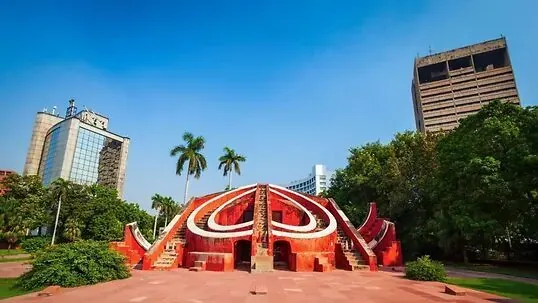
Amid the protests against CEC Gyanesh Kumar, the Delhi Police removed Jantar Mantar from the list of protest sites. Demonstrations can now be held at Ramlila Maidan, Burari Ground, and CBD Ground.
Amid the ongoing protests against Chief Election Commissioner (CEC) Gyanesh Kumar, the Home Ministry has taken a major decision. The Delhi Police has revised the designated venues for holding demonstrations. According to a standing order issued by Police Commissioner Anurag Kumar, Jantar Mantar has been removed from the notified venue as a protest site. Three new venues have been designated in Delhi in its place: Ramlila Maidan, Burari Ground, and the CBD Ground in East Delhi.
This order was issued based on the recommendations of a committee formed by the Ministry of Home Affairs. The committee was tasked with exploring alternatives to the existing designated venues to protect citizens' right to protest and organize demonstrations. Based on the committee's recommendations, three alternative locations have been designated for demonstrations. Recently, the Supreme Court also directed the establishment of designated venues for demonstrations.
The Home Ministry committee had searched for alternative sites
The first paragraph of the Delhi Police order states that the Ministry of Home Affairs of the Government of India had constituted a committee to identify alternative locations for holding protests. The committee was tasked with examining alternatives to the existing designated site to provide alternative locations for citizens to hold protestsBased on the committee's recommendations, Jantar Mantar has now been removed from the list of notified protest sites and three new locations have been designated. The order states that this decision was based on the committee's recommendations.
Where can we hold protests?
1. Ramlila Maidan: Ramlila Maidan, one of Delhi's major public grounds, has been included as a newly designated site for demonstrations. The procedures for holding sit-ins, protests, or other public events here will be specified under a separate SOP to be issued.
2. Burari Ground: Burari Ground has also been included in the new designated venues for demonstrations. The conditions, permitting procedures, and other arrangements for holding demonstrations here will be detailed in separate guidelines.
3. CBD Ground, East Delhi: The CBD Ground in East Delhi has been designated as the third alternative protest venue. This decision provides another designated location in the capital for holding protests.
History of Jantar Mantar
Jantar Mantar became the designated site for protests in Delhi in 1993. In 1988, farmers led by farmer leader Mahendra Singh Tikait organized a major agitation in the Boat Club area of Delhi. Following this, restrictions on protests were tightened there. Following the restrictions on the Boat Club, Jantar Mantar Road became the primary site for protests in 1993. However, this began as an administrative arrangement rather than a formal government announcement.
Anna Hazare's anti-corruption movement in 2011 brought Jantar Mantar nationwide recognition. Jantar Mantar has been known as a major center for protests in Delhi for nearly 33 years. It gained recognition in 1993, but after the Anna Hazare movement in 2011, it became a symbol of a major voice of protest at the national level. Jantar Mantar also made headlines due to the CJP movement. This time too, the CJP had requested permission to hold a protest at Jantar Mantar.
Now you will not be able to protest at Jantar Mantar, these 3 places have been decided for protests in Delhi.
TheFearless
12 Oct 2026 · 5:47 PM IST
Related Stories